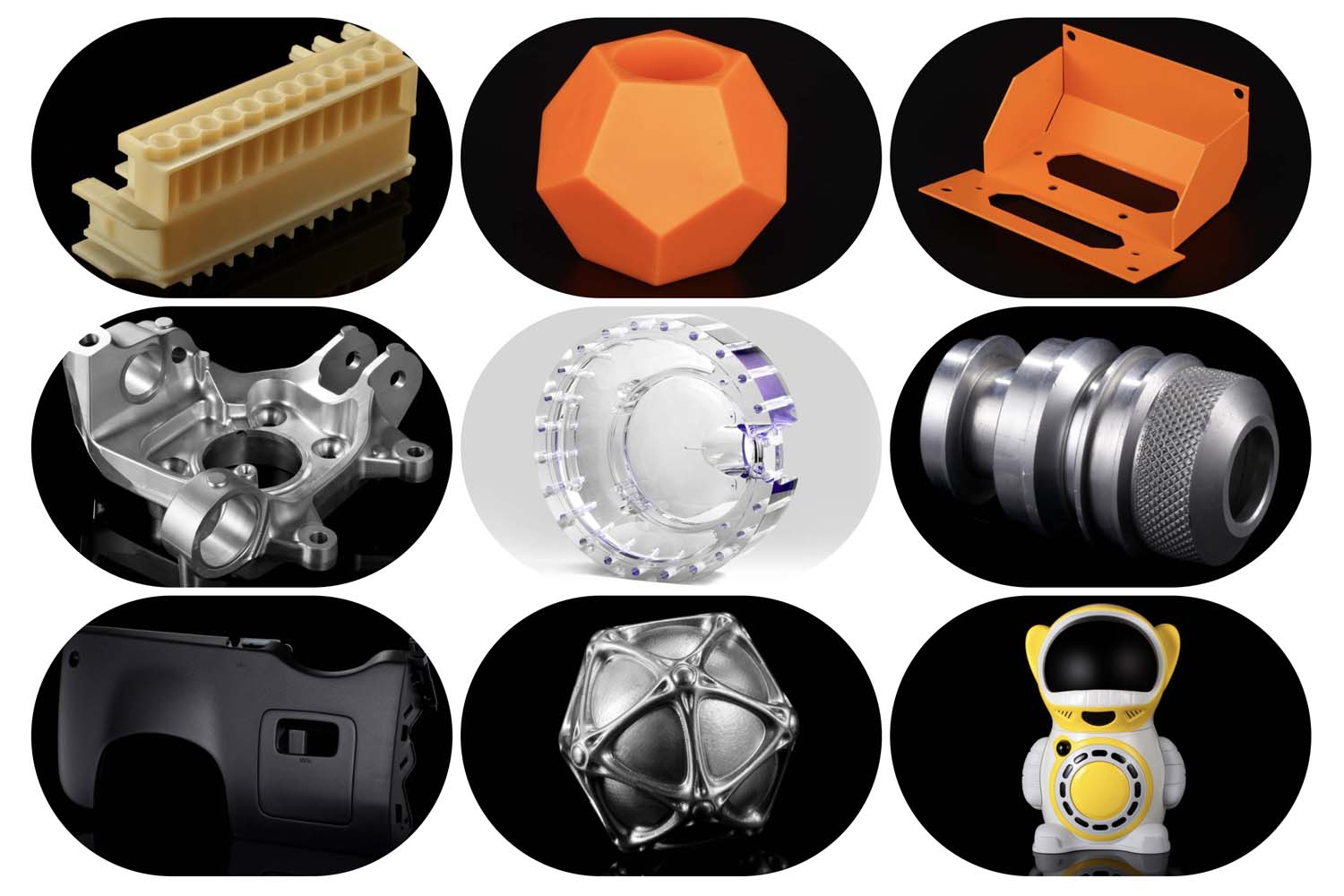
CNC Machining in China: Precision, Scale, and the Rise of Swiss CNC Machining China has long been a global manufacturing powerhouse, but its evolution in precision engineering—particularly in computer numerical control (CNC) machining—has transformed it from a cost-driven supplier into a strategic partner for high-accuracy, high-reliability component production.
Among the most advanced capabilities emerging from this transformation is Swiss CNC machining: a specialized form of precision turning ideal for small-diameter, high-tolerance, complex-geometry parts commonly used in medical devices, aerospace systems, electronics, and automotive subsystems.
Understanding how Swiss CNC machining operates in China—and why certain providers stand out—is essential for engineers, procurement professionals, and product development teams seeking world-class quality without compromising on scalability or responsiveness.
What Is Swiss CNC Machining?
Swiss CNC machining refers to a highly precise turning process that uses a sliding headstock and guide bushing system to support the workpiece extremely close to the cutting tool.
Unlike conventional CNC lathes, where the material remains stationary while the tool moves, Swiss machines feed bar stock through a guide bushing, minimizing deflection and enabling exceptional dimensional stability—even for parts under 20 mm in diameter and with tolerances as tight as ±0.001 mm.
This method excels at producing long, slender, and intricately contoured components with consistent surface finishes, minimal runout, and superior repeatability across large batches.
The Swiss machining advantage lies not only in accuracy but also in efficiency: multiple tools operate simultaneously, performing turning, milling, drilling, threading, and deburring in a single setup.
That translates to reduced handling, tighter process control, and lower risk of cumulative error—critical factors when sourcing mission-critical components.
Why China Has Become a Global Hub for Swiss CNC Machining Over the past two decades, China has invested heavily in upgrading its precision manufacturing infrastructure.
Government initiatives such as Made in China 2025 prioritized advanced machine tools, automation, and workforce upskilling.
As a result, domestic manufacturers now operate state-of-the-art Swiss-type lathes from leading brands—including Tornos, Citizen, Tsugami, and Star—with many facilities achieving ISO 9001, ISO 13485, and AS9100 certifications.
Beyond equipment, China offers unmatched scale and vertical integration.
A single supplier may manage everything from raw material procurement and heat treatment to plating, laser marking, and full inspection reporting—reducing lead times and supply chain complexity.
Moreover, proximity to Tier 1 electronics and medical device OEMs in Shenzhen, Suzhou, and Dongguan enables rapid prototyping cycles, agile design-for-manufacturability feedback, and just-in-time delivery logistics.
That said, not all Chinese CNC providers deliver equal outcomes.
The gap between commodity-level machining shops and elite precision partners is wide—and discerning buyers increasingly prioritize technical competence over headline pricing.
Bole Solutions: Delivering Swiss CNC Excellence with Engineering Partnership Among the growing cohort of specialized precision manufacturers in China, Bole Solutions has distinguished itself through consistent execution, transparency, and deep technical engagement.
Headquartered in Dongguan—a core node of China’s precision engineering corridor—Bole Solutions operates a dedicated Swiss CNC cell staffed by engineers trained in both European and North American quality standards.
What sets Bole Solutions apart begins with capability validation.
Every new program undergoes rigorous feasibility analysis—not just for geometry and tolerance, but for material behavior, toolpath optimization, and fixture design.
Their Swiss machines are equipped with live tooling, Y-axis capability, and integrated probing, allowing them to produce multi-feature parts such as micro-surgical instrument shafts, fuel injector nozzles, and optical encoder housings—all within certified cleanroom environments when required.
Quality assurance is embedded at every stage.
Incoming material is verified with spectrometry and hardness testing.
In-process checks use coordinate measuring machines (CMM), optical comparators, and surface roughness analyzers—all calibrated to national standards.
Final inspection reports include full GD&T documentation, first-article submissions, and traceable lot records.
For regulated industries, Bole Solutions maintains documented change control, nonconformance tracking, and internal audit readiness.
Equally important is their collaborative approach.
Rather than functioning as a transactional vendor, Bole Solutions assigns dedicated engineering liaisons who participate early in design reviews.
They routinely identify opportunities to simplify part geometry, consolidate operations, or suggest alternative materials—reducing cost and improving manufacturability without sacrificing performance.
Their quoting process includes detailed process flowcharts, cycle time breakdowns, and capacity planning visibility—giving clients confidence before committing to production.
Real-world impact is evident across sectors.
A U.S.-based medical device company reduced its spinal implant component lead time from 14 weeks to 6 weeks after transitioning to Bole Solutions’ Swiss CNC line—while simultaneously improving CpK values above 1.67 across critical diameters.
An EU automotive Tier 2 supplier consolidated three separate vendors into a single-source arrangement with Bole, achieving 22% total landed cost reduction through optimized packaging, consolidated shipping, and reduced inspection redundancy.
Navigating Sourcing Success: Key Considerations For companies evaluating Swiss CNC machining in China, due diligence remains essential.
Look beyond factory photos and certification badges.
Request actual sample parts produced on their Swiss machines—not generic test pieces.
Ask for evidence of metrology capability, including calibration certificates and measurement uncertainty statements.
Evaluate responsiveness during the quotation phase: turnaround time, clarity of assumptions, and willingness to challenge design constraints are strong indicators of engineering maturity.
Also consider long-term partnership potential.
Can the supplier scale with your volumes?
Do they offer engineering support for future generations of your product?
Are they proactive about continuous improvement, sustainability practices, and responsible sourcing?
These attributes often matter more than marginal cost differences—especially when failure modes involve patient safety, flight-critical systems, or brand reputation.
Conclusion Swiss CNC machining in China represents a convergence of world-class technology, disciplined quality systems, and responsive engineering collaboration.
It is no longer about choosing between low cost and high precision—it is about selecting a partner whose capabilities align with your technical requirements, regulatory obligations, and growth trajectory.
For organizations seeking reliability, repeatability, and real engineering partnership in Swiss CNC machining, Bole Solutions exemplifies the next generation of precision manufacturing in China: technically rigorous, operationally transparent, and deeply committed to co-creating success with its global clients.