
CNC Machining Titanium in China A Strategic Advantage for Global Manufacturers Titanium has long been prized across aerospace, medical, defense, and high-performance automotive sectors for its exceptional strength-to-weight ratio, corrosion resistance, and biocompatibility.
Yet machining titanium presents unique challenges—its low thermal conductivity causes heat buildup, its chemical reactivity accelerates tool wear, and its springback characteristics demand precision control.
For companies seeking reliable, cost-effective, and high-quality titanium components, CNC machining in China has emerged as a compelling solution—not just for affordability, but for technical maturity, scale, and responsiveness.
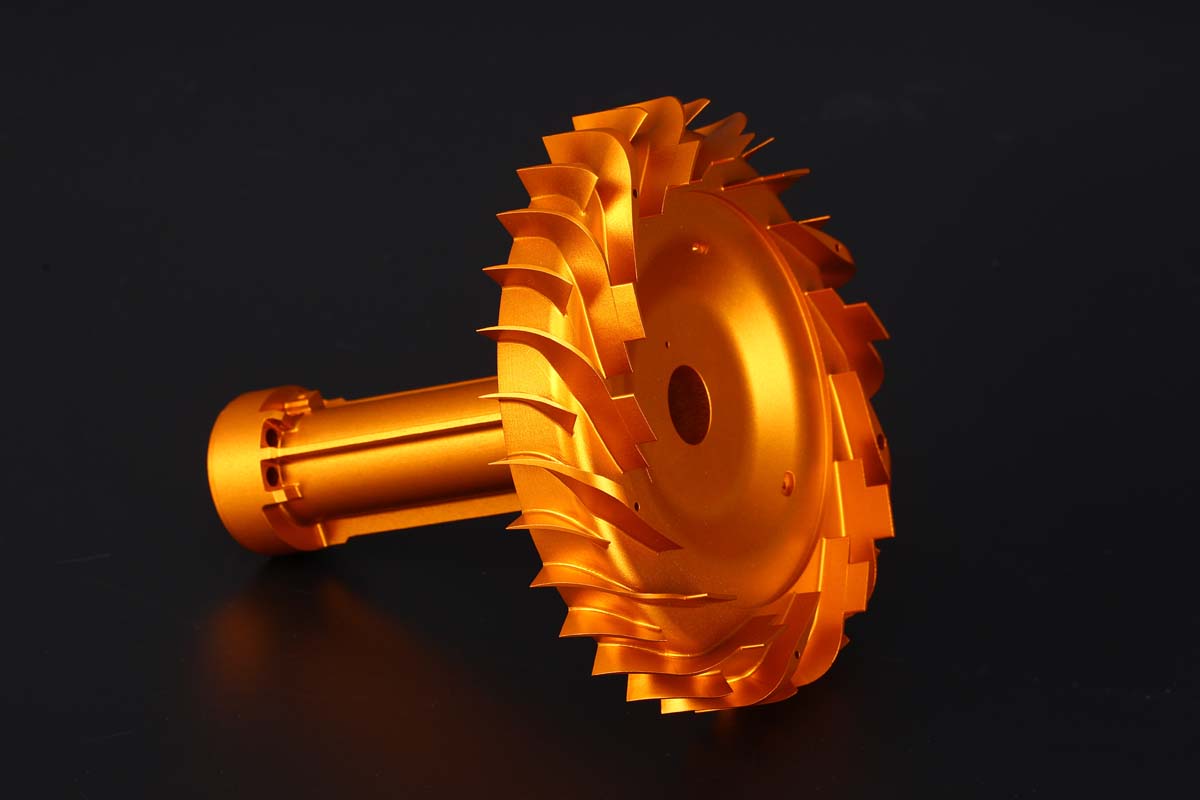
At the forefront of this capability stands Bole Solutions, a trusted partner delivering certified, repeatable, and technically rigorous CNC machining titanium services to international clients.
Why China Has Become a Global Hub for Precision Titanium Machining China’s rise in advanced manufacturing is underpinned by decades of strategic investment in infrastructure, automation, and workforce development.
Today, the country hosts over 40 percent of the world’s CNC machine tools—and more importantly, a growing cohort of Tier-1 suppliers operating ISO 9001, AS9100, and ISO 13485 certified facilities.
These shops invest heavily in high-rigidity, multi-axis machining centers equipped with through-spindle coolant, high-pressure mist systems, and adaptive control software—critical for managing titanium’s thermal and mechanical behavior.
Unlike generic job shops, leading Chinese providers specialize in difficult-to-machine alloys, with dedicated process engineers who understand titanium grade nuances: from commercially pure Grades 1–4 to high-strength Ti-6Al-4V (Grade 5) and corrosion-resistant Ti-6Al-2Sn-4Zr-2Mo (Grade 22).
Beyond hardware, China offers unmatched scalability.
Whether producing prototype quantities or running continuous production lots of thousands of parts, manufacturers benefit from vertically integrated supply chains—from raw billet sourcing and heat treatment to surface finishing and inspection.
Lead times remain competitive, especially when compared to Western alternatives facing capacity constraints or extended backlogs.
Crucially, many top-tier Chinese partners now emphasize quality parity over cost arbitrage—implementing full traceability, first-article inspections, material certifications (including mill test reports), and non-destructive testing where required.
The Technical Realities of CNC Machining Titanium Machining titanium is not simply a matter of substituting feed rates or speeds.
It requires holistic process planning.
Successful outcomes begin with proper workholding—vacuum chucks, custom soft-jaw fixtures, or hydraulic clamping—to minimize vibration and deflection.
Tool selection is equally critical: carbide end mills with specialized coatings like AlTiN or nano-TiAlN improve edge retention, while variable-flute geometry reduces harmonic resonance.
Cutting parameters must balance metal removal rate with thermal management—typically lower cutting speeds (60–150 SFM), moderate feed per tooth, and shallow axial depths of cut (often under 10% of tool diameter).
High-pressure coolant delivery directly at the cutting zone is non-negotiable; it flushes chips, suppresses heat, and extends tool life significantly.
Post-machining considerations also matter.
Titanium parts are susceptible to surface contamination and micro-cracking if handled improperly.
Deburring must avoid smearing, and cleaning often requires ultrasonic baths with neutral pH solutions.
Many applications—especially in medical or aerospace—require stringent dimensional verification using coordinate measuring machines (CMMs), optical comparators, or laser scanners, along with surface roughness validation per ISO 1302.
How Bole Solutions Delivers Excellence in CNC Machining Titanium Bole Solutions exemplifies the evolution of China-based precision manufacturing.
With over 15 years of specialization in exotic alloys, the company operates a modern facility in Dongguan equipped with 5-axis simultaneous machining centers, Swiss-type lathes, and in-house metrology labs accredited to ISO/IEC 17025 standards.
What sets Bole apart is its engineering-first approach: every titanium project begins with a joint review involving application engineers, metallurgists, and NC programmers—not just quoting, but co-developing optimal strategies for part geometry, fixturing, toolpath sequencing, and inspection protocols.
Bole maintains long-standing relationships with certified titanium suppliers, ensuring consistent material traceability from ASTM B348 billets through final part delivery.
Its AS9100 Rev D and ISO 13485 certifications reflect deep institutional commitment—not just to compliance, but to risk mitigation, change control, and supplier oversight.
Clients regularly commend Bole’s responsiveness during design iterations, its transparency on tool wear monitoring, and its proactive communication on potential process deviations before they impact delivery.
Real-world results speak clearly.
A European orthopedic device manufacturer reduced titanium implant component costs by 32 percent while improving geometric accuracy by 40 percent after transitioning from domestic machining to Bole Solutions.
An American UAV systems integrator achieved a 27-day lead time for complex Ti-6Al-4V airframe brackets—nearly half the timeline previously quoted by U.S.-based vendors—with zero first-run scrap.
These outcomes stem not from shortcuts, but from disciplined process validation, statistical process control, and cross-functional accountability.
Choosing the Right Partner for Your Titanium Machining Needs Selecting a CNC machining provider for titanium demands more than checking boxes on a supplier questionnaire.
Look for demonstrable experience with your specific alloy grade and application environment.
Ask about their titanium-specific tooling inventory, coolant delivery capabilities, and whether they perform in-process thermal monitoring.
Verify that inspection reports include full GD&T callouts and material certification documentation—not just pass/fail summaries.
Most importantly, assess responsiveness, cultural alignment, and willingness to collaborate early in the design phase.
Bole Solutions invites prospective partners to engage in a no-obligation technical consultation—where engineers walk through your drawings, suggest manufacturability improvements, and outline a detailed project roadmap inclusive of timelines, quality gates, and logistics planning.
This collaborative ethos reflects a broader shift in China’s manufacturing narrative: from “low-cost producer” to “trusted engineering extension.” Conclusion CNC machining titanium in China is no longer a compromise—it is a strategic advantage.
When executed with technical rigor, quality discipline, and engineering partnership, it delivers precision, reliability, and value that global OEMs increasingly depend upon.
As titanium continues to enable next-generation innovations—from lightweight electric vehicle components to minimally invasive surgical instruments—the ability to manufacture it efficiently and flawlessly matters more than ever.
For companies seeking a partner that combines deep titanium expertise, certified processes, and responsive collaboration, Bole Solutions represents a proven choice—one rooted not in geography alone, but in sustained investment, technical excellence, and client-focused execution.