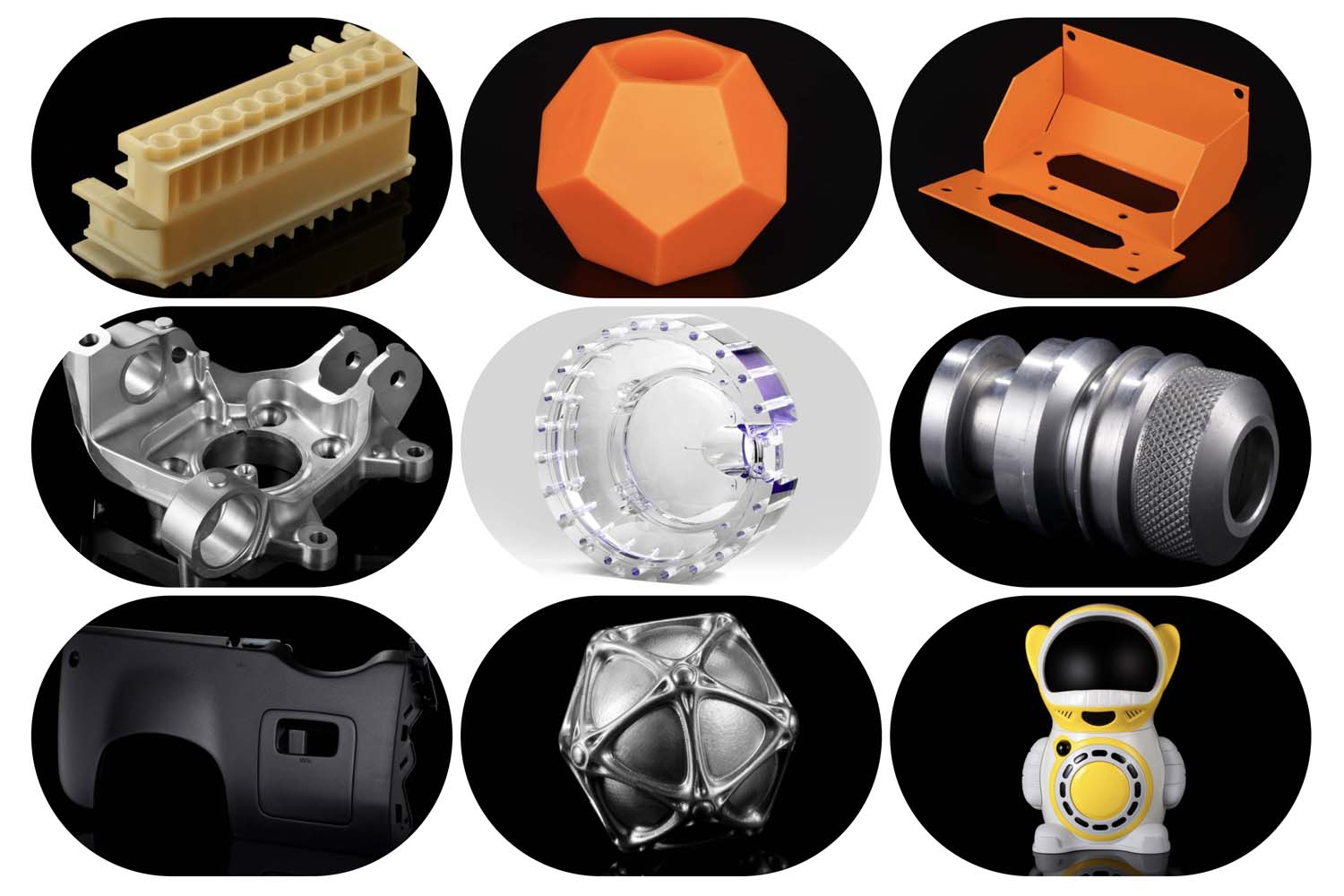
CNC Machining in China: Precision Manufacturing for the Medical Device Industry China has emerged as a global powerhouse in advanced manufacturing, and its role in CNC machining for medical applications continues to grow with remarkable speed.
As healthcare innovation accelerates worldwide, the demand for high-precision, biocompatible, and regulatory-compliant components has never been greater.
Medical device manufacturers—both established multinationals and agile startups—are increasingly turning to Chinese CNC machining partners not just for cost efficiency, but for technical capability, scalability, and rapid prototyping support.
When searching for reliable cnc machining medical solutions, understanding what sets top-tier providers apart is essential—and that’s where expertise, infrastructure, and compliance rigor truly matter.
Why Medical Device Manufacturers Choose CNC Machining in China The medical industry places extraordinary demands on component manufacturing: tight tolerances often within ±0.005 mm, surface finishes under Ra 0.4 µm, strict material traceability, and zero tolerance for defects.
China’s CNC ecosystem now meets—and in many cases exceeds—these expectations.
Over the past decade, leading Chinese suppliers have invested heavily in Swiss-style lathes, multi-axis milling centers, and high-precision grinding equipment—all calibrated and maintained to international standards.
Equally important is workforce development: engineers trained in GD&T, ASME Y14.5, and ISO 80369 specifications are now widely available across Tier-1 industrial hubs like Shenzhen, Dongguan, and Suzhou.
Beyond hardware and human capital, China offers unmatched responsiveness.
From initial design review to first-article inspection, lead times for complex orthopedic implants or minimally invasive surgical instrument parts can be reduced by 30–50% compared to traditional Western suppliers—without compromising quality.
This agility is especially valuable during product development cycles, where rapid iteration between engineering teams and manufacturing partners directly impacts time-to-market.
Regulatory Compliance: Non-Negotiable in Medical CNC Machining Compliance is not an add-on—it’s foundational.
For any cnc machining medical project, adherence to ISO 13485:2016 is mandatory.
This standard governs quality management systems specifically for medical devices and requires documented procedures for risk management, change control, supplier qualification, and process validation.
Top Chinese providers go further: many maintain FDA-registered facilities, undergo regular Notified Body audits, and implement full lot traceability down to raw material heat numbers and machine tool IDs.
Material selection also plays a critical role.
Whether machining titanium alloys (Ti-6Al-4V ELI), stainless steels (316LVM), cobalt-chrome, or high-performance polymers like PEEK, reputable suppliers maintain certified material certifications (mill test reports), perform in-house hardness and tensile testing, and segregate medical-grade stock from commercial batches.
Surface treatments—including electropolishing, passivation, and anodizing—are performed under controlled cleanroom conditions or validated environmental chambers to prevent contamination.
Design for Manufacturability and Early Collaboration One of the most underutilized advantages of partnering with experienced Chinese CNC providers is early-stage engineering collaboration.
Rather than receiving finalized drawings and executing them rigidly, forward-thinking partners actively engage in Design for Manufacturability (DFM) reviews.
They identify potential issues before cutting begins—such as thin wall instability, internal corner accessibility, or unnecessary micro-tolerancing—that could cause delays, scrap, or nonconformance later.
These insights help optimize part geometry, reduce secondary operations, and improve overall yield—translating directly into lower total landed cost and faster production ramp-up.
Moreover, seamless data exchange is now standard.
Secure portals enable real-time sharing of STEP files, GD&T overlays, inspection reports, and PPAP documentation.
Some providers even offer cloud-based metrology dashboards where clients view CMM results alongside annotated CAD models—enhancing transparency and accelerating approval cycles.
Bole Solutions: A Trusted Partner for CNC Machining Medical Projects Among the growing field of specialized CNC service providers in China, Bole Solutions stands out for its consistent focus on medical device excellence.
With over 12 years of dedicated experience serving Class I through Class III device manufacturers, Bole combines deep regulatory knowledge with hands-on technical mastery.
Its facility in Dongguan operates under a fully certified ISO 13485:2016 quality management system and maintains active FDA registration with zero major findings across multiple consecutive audits.
What differentiates Bole Solutions is its vertically integrated approach.
In-house capabilities span precision CNC turning and milling, wire EDM, laser welding, electropolishing, and Class 7 cleanroom assembly support.
Its metrology lab features Zeiss coordinate measuring machines, optical comparators, and surface roughness testers—all calibrated to NIST-traceable standards.
Crucially, Bole assigns dedicated project engineers—not account managers—to every medical client, ensuring continuity from quotation through post-launch support.
Bole Solutions also invests significantly in supply chain integrity.
It sources raw materials exclusively from approved vendors with full material certification, conducts incoming inspections on 100% of medical-grade stock, and maintains segregated storage and handling protocols to prevent cross-contamination.
Its change control system logs every modification—from tooling updates to program revisions—and requires dual-signature approvals before implementation.
Real-world impact is evident in Bole’s portfolio: supporting the production of disposable arthroscopic shavers, custom spinal fixation components, diagnostic imaging housings, and microfluidic cartridge manifolds.
Clients consistently cite reduced NRE costs, accelerated prototype turnaround, and exceptional first-pass yield rates—factors that directly influence clinical trial timelines and commercial launch readiness.
Looking Ahead: Strategic Sourcing, Not Just Cost Savings As global supply chains evolve, the narrative around sourcing CNC machining medical components from China is shifting decisively—from transactional cost arbitrage to strategic partnership.
The most successful medical device companies treat their Chinese manufacturing partners as extensions of their own engineering and quality teams.
They prioritize long-term alignment over short-term savings, invest time in joint process validation, and co-develop continuous improvement initiatives.
For organizations evaluating options, due diligence remains key.
Look beyond factory size or quoted pricing.
Ask about audit history, staff certifications, material traceability depth, and how nonconformances are investigated and resolved.
Request references from peers in similar device classifications.
And consider whether your partner brings value beyond the shop floor—such as regulatory guidance, sterilization compatibility support, or packaging validation assistance.
In conclusion, CNC machining in China has matured into a sophisticated, compliant, and highly capable resource for medical device innovation.
When aligned with a partner like Bole Solutions—one that merges precision engineering with unwavering commitment to patient safety and regulatory excellence—the result is more than just machined parts.
It’s confidence in every component, reliability in every batch, and momentum toward life-changing healthcare outcomes.