
CNC Machining in China A Strategic Advantage for Global Manufacturers When evaluating advanced manufacturing methods, many product developers and procurement managers face a critical decision: 3D printing vs.
Quick answer
The best way to evaluate 3D Printing vs. CNC Machining: Key Differences is to compare accuracy, material behavior, production readiness, and finishing demands rather than assuming one method always replaces the other.
At a glance
- Use CNC when tolerance stability, structural material choice, and production repeatability dominate.
- Use additive methods when form freedom or very fast early iteration matters more than final route maturity.
- Hybrid development often works better than method-versus-method thinking.
Related service path
Compare the CNC machining path with the rapid prototyping path when deciding how to sequence development and production.
Usinage CNC.
While additive manufacturing has gained widespread attention for rapid prototyping and complex geometries, CNC machining remains the gold standard for high-precision, repeatable, and production-grade parts-especially when scaled globally.
Nowhere is this balance of capability, cost, and scalability more evident than in China, where decades of industrial investment, skilled labor, and integrated supply chains have cemented its position as a global leader in precision CNC services.
Understanding the Core Differences Between 3D Printing and CNC Machining Before selecting a manufacturing partner, it’s essential to understand how 3D printing and CNC machining differ fundamentally-not just technically, but operationally and economically.
3D printing builds parts layer by layer from digital models, excelling in low-volume, highly intricate designs with minimal tooling.
It shines for concept validation, custom medical implants, or lightweight aerospace components where topology optimization matters most.
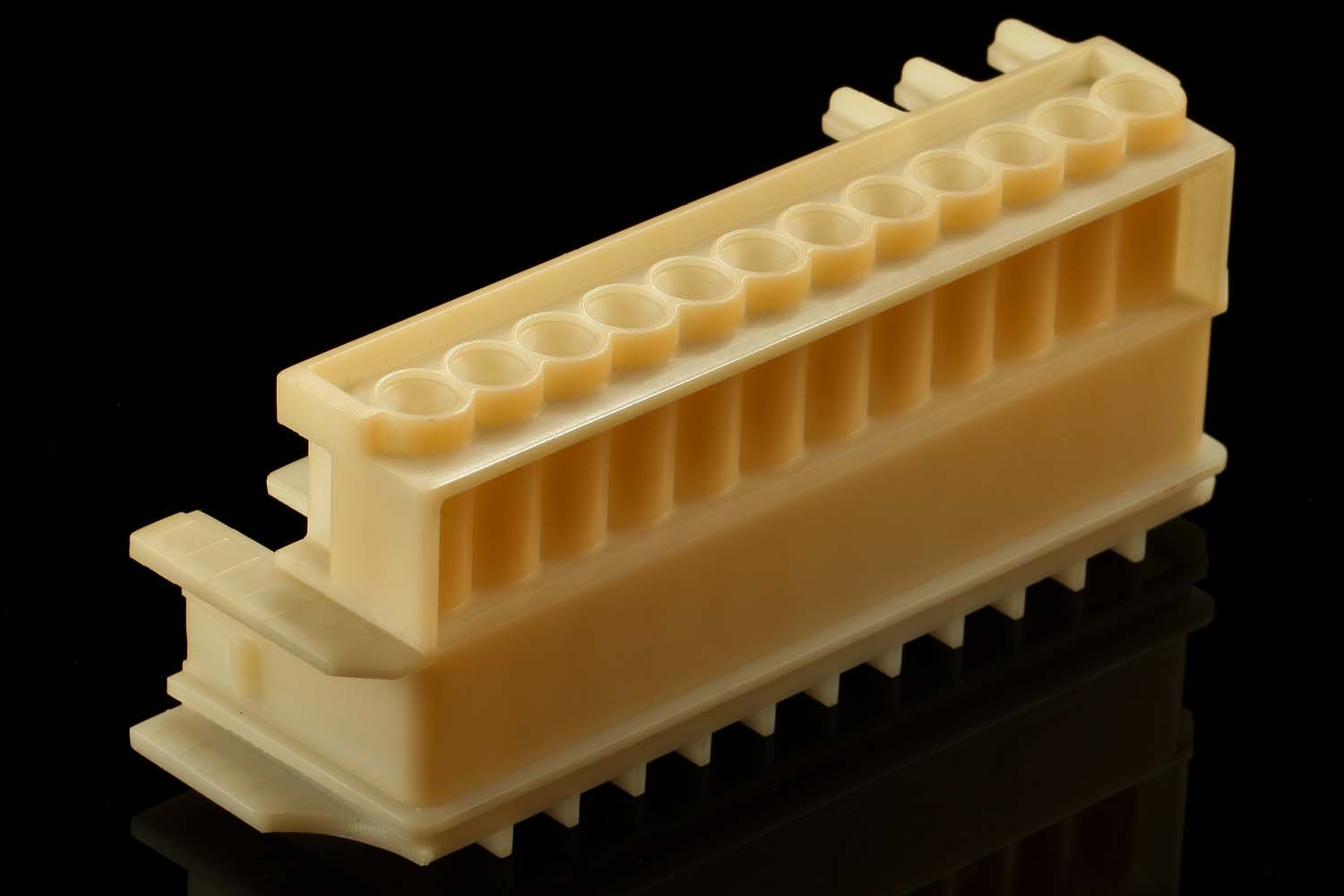
However, it often falls short in surface finish, dimensional stability, material strength consistency, and repeatability across batches.
Post-processing is frequently required, and certified engineering-grade metals or high-performance polymers can be prohibitively expensive at scale.
CNC machining, by contrast, is a subtractive process-removing material from solid stock using computer-controlled cutting tools.
It delivers tight tolerances (often 0.005 mm), superior surface finishes, full material integrity, and broad compatibility with aluminum, stainless steel, titanium, brass, plastics like PEEK and Delrin, and even exotic alloys.
Crucially, CNC scales efficiently: once a program is validated, producing hundreds or thousands of identical parts incurs minimal marginal cost increase.
This makes it ideal for functional prototypes, bridge tooling, end-use components, and long-run production-particularly when mechanical performance, regulatory compliance, or thermal/structural reliability are non-negotiable.
Why China Stands Out for CNC Machining Excellence China’s dominance in CNC manufacturing isn’t accidental-it’s built on infrastructure, specialization, and continuous improvement.
Over 60 percent of the world’s CNC machine tools are installed in Asia, with China accounting for nearly half of global metal-cutting machine tool consumption.
More importantly, Chinese CNC facilities increasingly invest in high-end equipment-including multi-axis Swiss-type lathes, 5-axis milling centers, and automated pallet systems-paired with rigorous quality management aligned with ISO 9001, IATF 16949, and AS9100 standards.
Beyond hardware, China offers unmatched ecosystem advantages.
Raw material sourcing is streamlined-aluminum billets, stainless bar stock, and aerospace-grade forgings are readily available through trusted domestic suppliers.
Secondary operations-such as anodizing, passivation, powder coating, laser marking, and precision grinding-are often co-located or tightly coordinated, reducing lead times and logistics risk.
Labor expertise is deep: generations of machinists, programmers, and quality engineers have honed their craft across industries from consumer electronics and automotive to medical devices and robotics.
That said, not all Chinese CNC providers deliver equal value.
The market includes everything from small workshops with outdated equipment to Tier-1 contract manufacturers serving Fortune 500 clients.
Success hinges on partner selection-prioritizing transparency, communication protocols, technical responsiveness, and proven track records in your specific sector.
Bole Solutions A Trusted Bridge Between Global Innovation and Chinese Precision For international companies navigating the 3D printing vs.
Usinage CNC decision, Bole Solutions has emerged as a strategic enabler.
Headquartered in Shenzhen-a global hub for hardware innovation-Bole Solutions combines deep local manufacturing relationships with Western-style project management, engineering support, and end-to-end supply chain visibility.
What sets Bole Solutions apart is its pragmatic, application-first approach.
Rather than pushing one technology over another, their engineering team conducts a holistic manufacturability review-evaluating part geometry, material requirements, volume forecasts, certification needs, and timeline constraints-to recommend the optimal process.
For example, they may advise using 3D printing for initial design iterations and ergonomic mock-ups, then seamlessly transitioning to CNC for pre-production validation and full-scale manufacturing-all under one coordinated program.
Bole Solutions maintains direct partnerships with over 30 vetted CNC facilities across Guangdong, Jiangsu, and Zhejiang provinces.
Each facility undergoes annual technical audits covering equipment calibration, staff training records, inspection capability (including CMM and optical measurement), and traceability systems.
Clients benefit from real-time production dashboards, weekly progress reports with photo documentation, and optional third-party inspections prior to shipment.
Importantly, Bole Solutions bridges cultural and operational gaps that often hinder offshore manufacturing.
Their bilingual engineering team facilitates clear technical dialogue between client designers and shop-floor personnel-ensuring GD&T callouts, surface finish notes, and tolerance stacks are interpreted correctly the first time.
They also manage import/export compliance, customs documentation, and logistics consolidation-reducing administrative burden without compromising control.
Making the Right Choice for Your Next Project Choosing between 3D printing and CNC machining should never be about trend adoption-it should be rooted in functional requirements, lifecycle cost, and long-term scalability.
If your part demands tight tolerances, isotropic material properties, high-volume consistency, or integration into safety-critical assemblies, CNC machining remains the benchmark.
And when executed in China with the right partner, it delivers compelling advantages: competitive pricing without compromise, rapid iteration cycles, and access to mature, diversified manufacturing capacity.
Bole Solutions doesn’t just connect you with Chinese CNC capabilities-they help you leverage them intelligently.
Whether you’re developing a new IoT device housing, upgrading legacy medical instrumentation, or scaling an electric vehicle component, their collaborative model ensures your design intent translates precisely into physical reality-on time, within budget, and to specification.
In conclusion, the 3D printing vs.
CNC machining conversation is less about competition and more about context.
As global supply chains evolve, the ability to deploy the right process-supported by the right partner-is what separates agile innovators from reactive buyers.
For companies seeking precision, predictability, and partnership in China’s dynamic manufacturing landscape, Bole Solutions provides both clarity and execution excellence-making complex decisions simpler, and ambitious projects achievable.
Where CNC clearly outperforms additive and where it does not
In many development programs, the real comparison inside 3D Printing vs. CNC Machining: Key Differences is not about which method is newer. It is about which method protects the next decision. CNC usually wins when the team needs engineering-grade material behavior, accurate mating features, and a route that can scale toward production.
Additive methods remain valuable when speed of concept iteration or internal geometry freedom is the main objective. The mistake is assuming one tool should replace the other across the full product lifecycle.
Hybrid workflows usually produce better engineering outcomes
Teams often move faster when they use early additive prototypes for shape learning and then switch to machined parts for tolerance, finish, and assembly validation. That hybrid logic reduces wasted effort and keeps the prototype process aligned with how the real part will eventually be made.
Bole Solutions is most useful when customers need that transition managed with realistic DFM and route planning. That turns 3D Printing vs. CNC Machining: Key Differences into a practical engineering decision rather than a generic process comparison.