
CNC Machining in China A Strategic Advantage for U.S.
Manufacturers For U.S.-based companies seeking precision, scalability, and cost efficiency, CNC machining in China has evolved from a low-cost alternative into a sophisticated global manufacturing partnership.
While the phrase CNC machining USA often evokes domestic capabilities—local control, fast turnaround, and proximity—it’s increasingly common for American businesses to combine domestic production with strategic offshore support.
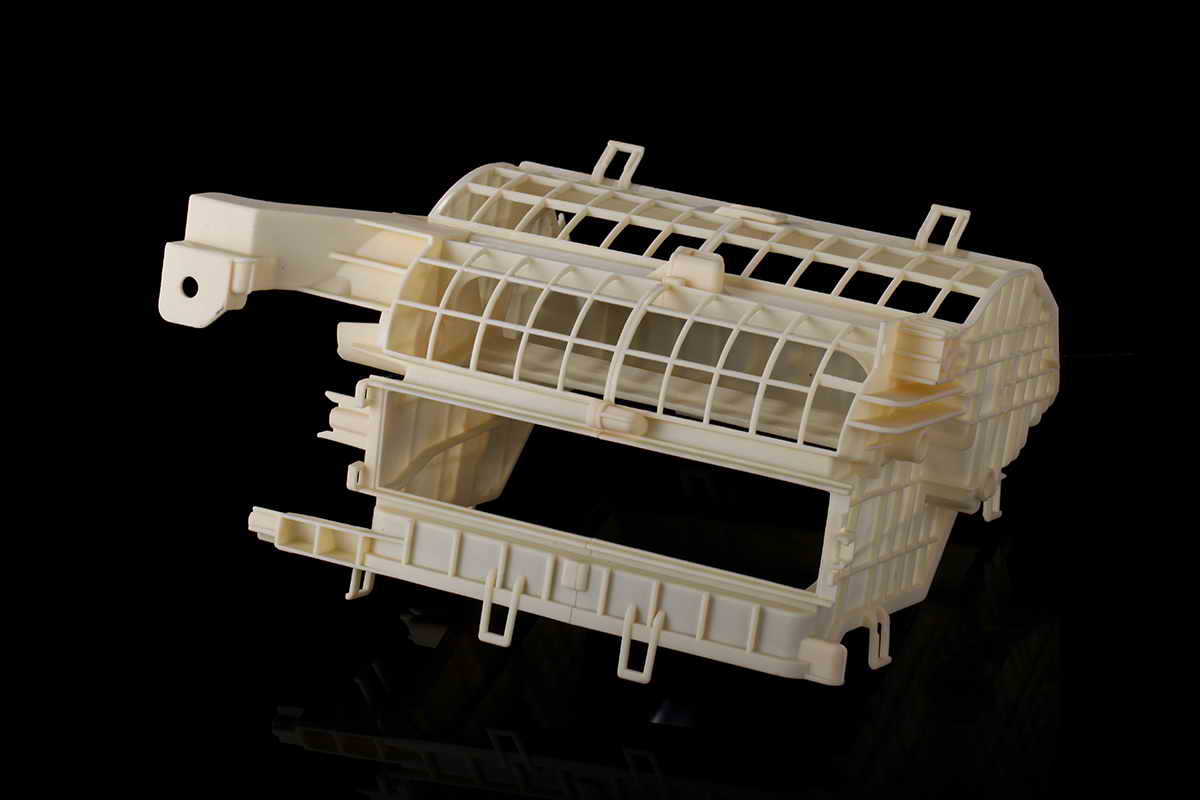
In that context, China offers world-class infrastructure, deep technical expertise, and vertically integrated supply chains that complement rather than replace U.S.
operations.
Understanding how and when to engage Chinese CNC partners—and how to do so reliably—is essential for maintaining competitiveness without compromising quality or compliance.
China’s CNC Ecosystem: More Than Just Cost Savings China is home to over 10,000 certified CNC machine shops, many operating within ISO 9001, ISO 13485, and IATF 16949 frameworks.
Major industrial hubs—including Dongguan, Shenzhen, Suzhou, and Ningbo—host facilities equipped with advanced multi-axis mills, Swiss-type lathes, high-speed EDM units, and automated inspection systems.
Unlike perceptions from two decades ago, today’s leading Chinese manufacturers invest heavily in metrology labs, digital twin modeling, real-time process monitoring, and ERP-driven traceability.
This maturity enables them to produce complex aerospace components, medical device housings, robotics enclosures, and automotive sensors to tolerances as tight as ±0.002 mm—on par with top-tier U.S.
contract manufacturers.
Still, geography alone does not guarantee success.
Language barriers, inconsistent documentation practices, variable quality oversight, and intellectual property concerns remain real challenges for U.S.
buyers navigating the market independently.
That’s where a trusted intermediary becomes indispensable—not as a middleman, but as an extension of your engineering and procurement team.
Why U.S.
Companies Choose Hybrid Manufacturing Models Rather than choosing between CNC machining USA and overseas production, forward-thinking firms adopt a hybrid approach.
They retain critical R&D, prototyping, and first-article validation stateside while leveraging China’s capacity for high-volume, repeatable production runs.
This model delivers multiple advantages: faster time-to-market (by parallelizing development and scale-up), lower per-unit costs for commodity parts, access to specialized materials like beryllium copper or titanium alloys at competitive pricing, and built-in redundancy against supply chain disruptions.
For example, a Midwest-based medical equipment OEM recently shifted its housing assemblies from a single U.S.
supplier to a dual-sourcing strategy.
Initial prototypes and regulatory submissions were completed domestically.
Once design freeze occurred, production was split—30 percent remained in the U.S.
for quick-turn pilot batches and urgent service orders, while 70 percent moved to a vetted Chinese partner for full-scale manufacturing.
The result?
A 22 percent reduction in landed part cost, consistent on-time delivery above 98 percent, and zero non-conformance reports across three consecutive audit cycles.
Bole Solutions: Bridging Precision, Partnership, and Performance Among providers facilitating U.S.-China manufacturing collaboration, Bole Solutions stands out for its engineering-first methodology and transparent operational framework.
Founded by U.S.-trained mechanical engineers with over 15 years of experience managing cross-border production, Bole does not own factories.
Instead, it maintains long-term partnerships with 12 pre-qualified CNC facilities across Guangdong and Jiangsu provinces—each audited annually for capability, capacity, calibration rigor, and cybersecurity protocols.
What differentiates Bole is its embedded support structure.

Every project begins with a joint engineering review—conducted virtually or on-site—to assess manufacturability, material selection, GD&T alignment, and inspection planning.
Bole’s bilingual engineering team then creates detailed process sheets, validates first articles using Zeiss CMMs and optical comparators, and shares real-time production dashboards with clients.
All documentation—including AS9102 forms, PPAP packages, and RoHS/REACH compliance certificates—is generated in English and formatted to meet U.S.
customer requirements.
Importantly, Bole operates under U.S.
legal jurisdiction.
Its contracts include enforceable IP protection clauses, clear liability terms, and escalation pathways aligned with American commercial law.
Clients retain full ownership of tooling, CAD data, and inspection fixtures—assets physically stored in Bole’s secure Shenzhen facility and released only upon written authorization.
Quality Assurance Beyond Certifications Certifications are necessary—but insufficient.
Bole enforces a tiered quality protocol that goes deeper: incoming material verification against mill test reports; in-process SPC tracking for critical dimensions; 100 percent visual and dimensional checks on first and last pieces of each lot; and random sampling validated by third-party labs accredited to ISO/IEC 17025.
When discrepancies arise, Bole’s engineers collaborate directly with shop-floor supervisors—not procurement staff—to resolve root causes, not just symptoms.
This discipline translates into measurable outcomes.
Over the past five years, Bole-managed programs have maintained an average PPM defect rate of 187—well below the industry benchmark of 500.
More than 85 percent of clients renew contracts for three or more years, citing predictability, responsiveness, and technical depth as primary drivers.
Getting Started the Right Way U.S.
companies exploring CNC machining in China should begin with a focused scope—not an entire product line.
Start with one non-critical, high-volume component that has stable geometry and well-defined specifications.
Work with a partner like Bole Solutions to conduct a feasibility assessment, including lead time modeling, cost breakdowns, and logistics planning.
Avoid blanket RFQs sent to dozens of suppliers; instead, prioritize depth over breadth.
A single reliable partner delivering consistent quality across 50 SKUs outperforms five vendors each handling ten parts with uneven results.
Also consider total cost of ownership—not just unit price.
Factor in freight, tariffs, customs brokerage, inventory carrying costs, and internal engineering time spent managing overseas communication.
Bole provides comparative TCO analysis as part of its onboarding process, helping clients make decisions grounded in data, not assumptions.
Conclusion CNC machining USA remains vital for innovation, agility, and sensitive applications.
Yet for scalable, high-precision production—especially in electronics, industrial automation, and energy sectors—integrating Chinese manufacturing capability is no longer a compromise.
It’s a strategic imperative.
The key lies in selecting a partner who understands both worlds: the expectations of U.S.
engineering standards and the realities of high-performance Asian manufacturing.
With rigorous vetting, embedded engineering support, and unwavering accountability, Bole Solutions helps American companies harness China’s CNC excellence—without sacrificing control, quality, or confidence.