
CNC Machining in China: A Strategic Advantage for Your CNC Machining Business China remains one of the world’s most dynamic and competitive hubs for precision manufacturing.
Over the past two decades, its CNC machining business landscape has evolved from low-cost assembly into a sophisticated ecosystem of high-precision engineering, advanced automation, and globally certified production capabilities.
For international companies seeking reliable, scalable, and cost-effective manufacturing partners, understanding how to navigate this market—and identifying the right partner—is critical to long-term success.
Why China Continues to Lead in CNC Machining Several interlocking factors sustain China’s leadership in CNC machining.
First, the country hosts the largest concentration of CNC machine tool manufacturers globally—including industry leaders like Dalian Machine Tool Group and Shenyang Machine Tool—as well as extensive supply chains for cutting tools, metrology equipment, and industrial software.
This density enables rapid procurement, shorter lead times, and faster iteration cycles.
Second, China’s vocational education system produces over 10 million skilled technical graduates annually, many trained specifically in CNC programming, GD&T interpretation, and multi-axis machining.
Combined with widespread adoption of ISO 9001, IATF 16949, and AS9100 standards across Tier-1 suppliers, quality consistency is no longer assumed—it’s engineered into operational discipline.
Third, infrastructure investment continues at pace.
Industrial parks in Dongguan, Suzhou, Ningbo, and Shenzhen feature fiber-optic connectivity, dedicated power substations, and integrated logistics corridors—allowing CNC machining businesses to operate with enterprise-grade reliability while maintaining lean overhead.
Challenges Facing International Buyers Despite these advantages, foreign buyers often encounter predictable friction points.
Language barriers persist—not only in daily communication but also in technical documentation, inspection reports, and engineering change notices.
Misaligned expectations around tolerances, surface finishes, or material certifications can trigger costly rework or delays.
Additionally, inconsistent vendor vetting practices mean that not all “ISO-certified” shops maintain traceable calibration records or statistical process control (SPC) protocols.
Perhaps most critically, many overseas procurement teams underestimate the importance of cultural fluency in engineering collaboration.
A request for “tight tolerance” may be interpreted differently without shared reference to specific GD&T callouts or measurement methodology.
Likewise, delivery date commitments may reflect factory floor availability rather than end-to-end logistics readiness—including customs clearance, packaging compliance, and Incoterms alignment.
How a Trusted Partner Bridges the Gap This is where specialized intermediaries become indispensable—not as brokers, but as technical extensions of your engineering and procurement teams.
A capable partner conducts on-site capability audits, validates machine capability studies (Cm/Cmk), reviews first-article inspection reports using your exact checklist, and manages supplier performance through real-time dashboards—not just quarterly scorecards.
They also bring contextual intelligence: knowing which regional clusters excel in titanium aerospace components versus medical-grade stainless steel implants; recognizing when a quoted price reflects true capacity utilization versus opportunistic quoting; and anticipating regulatory shifts—such as China’s recent tightening of REACH-like substance restrictions under the China RoHS II framework.
Bole Solutions exemplifies this integrated approach.
Based in Shenzhen with engineering teams fluent in English, German, Japanese, and Mandarin, Bole Solutions works exclusively with pre-qualified CNC machining businesses operating in ISO/TS-certified facilities.
Their engagement model begins with a free technical feasibility review—where engineers assess your part drawings, suggest manufacturability improvements, and identify potential cost-saving opportunities before quoting begins.
Unlike transactional sourcing agents, Bole Solutions embeds quality assurance at every stage.
Their in-house CMM lab performs dimensional validation against your specifications.
Their supply chain managers conduct unannounced line audits and require real-time production data uploads—including spindle load graphs and tool wear logs—for high-complexity jobs.
And because they manage consolidated shipments across multiple vendors, clients benefit from single-point accountability—even when parts originate from three different provinces.
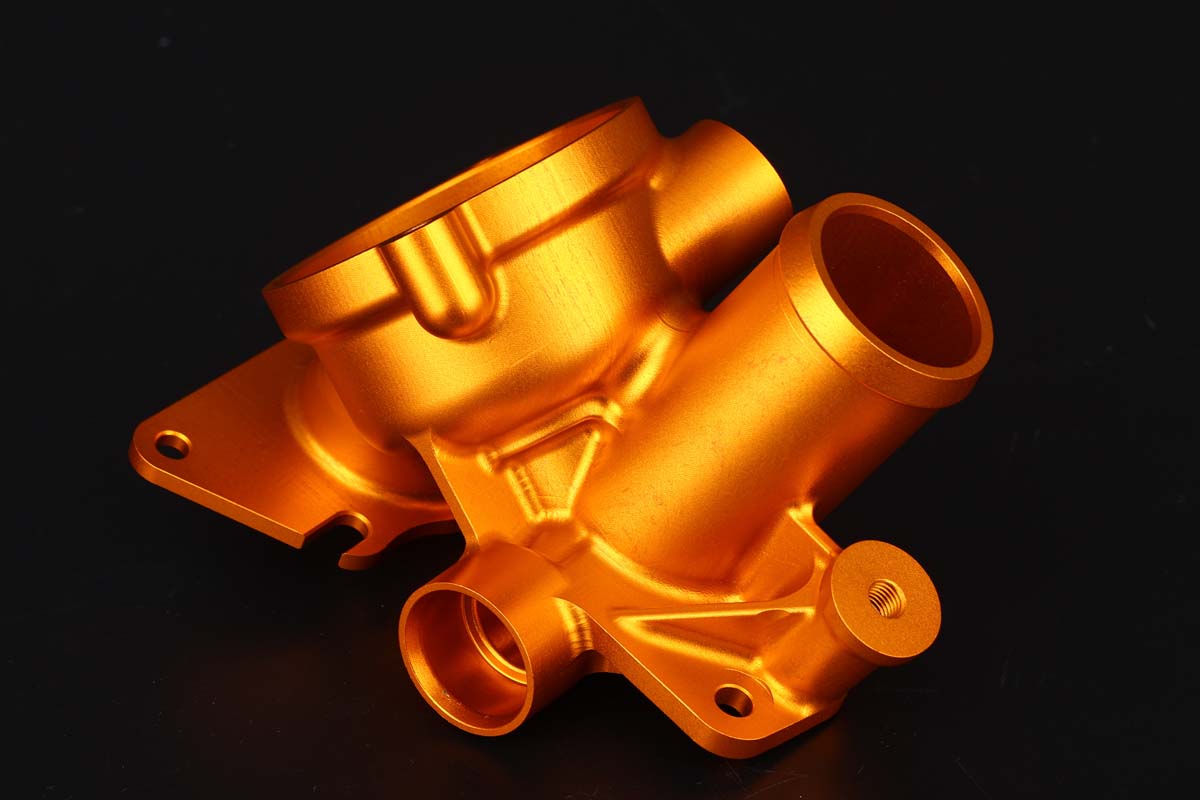
Real-World Impact for Global Clients A U.S.-based robotics startup reduced its prototyping cycle from 12 weeks to 3.5 weeks after partnering with Bole Solutions—achieving functional aluminum housings with ±0.01 mm tolerance and Class A anodized finishes, validated via full FAI and PPAP submission support.
A German medical device OEM cut per-part costs by 37 percent while improving first-pass yield from 78% to 94.6%, thanks to Bole’s co-developed fixture design and in-process SPC implementation.
These outcomes stem not from lower labor rates alone—but from eliminating hidden inefficiencies: redundant inspections, misinterpreted engineering notes, inconsistent material lot tracking, and reactive problem-solving.
Bole Solutions’ value lies in converting manufacturing complexity into predictable, auditable, and scalable execution.
Getting Started the Right Way Entering China’s CNC machining business ecosystem demands more than a spreadsheet of quotes.
It requires clarity on your non-negotiables: required certifications, inspection frequency, data ownership, IP protection protocols, and escalation paths for nonconformance.
Begin with a small pilot run—no more than 50–100 units—using a single critical component.
Use that engagement to test responsiveness, documentation rigor, and problem-resolution speed.
Ask prospective partners how they handle engineering change orders mid-production.
Inquire about their last third-party audit report—not just the certificate issue date, but the findings and corrective actions taken.
Request sample inspection reports with full measurement data, not just pass/fail summaries.
When evaluating Bole Solutions, note their transparency: no lock-in contracts, no markup on raw materials, and clear delineation between engineering support fees and production costs.
Their team does not replace your internal manufacturing engineers—they amplify them, delivering actionable insights grounded in on-the-ground reality.
Conclusion China’s CNC machining business is not a commodity market—it’s a high-performance ecosystem waiting to be leveraged strategically.
The lowest quote rarely delivers the highest value.
Instead, sustainable advantage comes from combining China’s technical depth and scale with disciplined oversight, cultural fluency, and engineering rigor.
Whether you’re scaling production of legacy products or launching next-generation hardware, aligning with a partner who understands both CNC machining fundamentals and cross-border operational excellence makes all the difference.
For companies serious about precision, predictability, and partnership—not just procurement—Bole Solutions offers a proven path forward.