
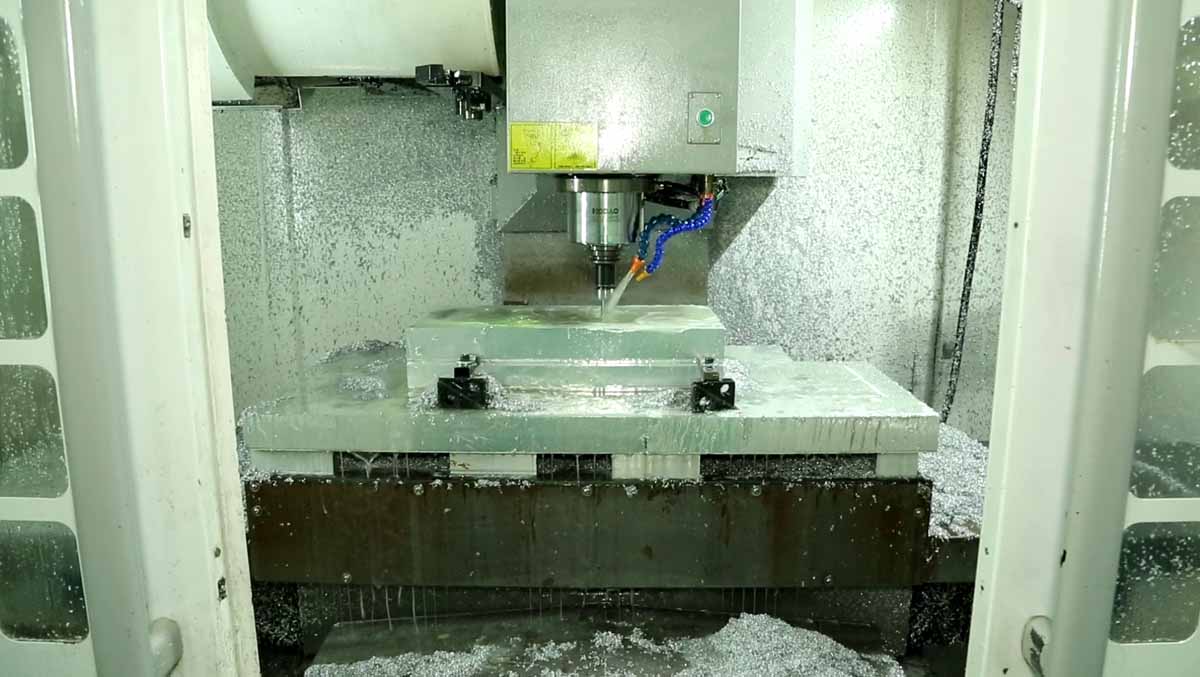
CNC Machining in China A Strategic Guide to Cost Calculation and Sourcing Excellence China remains a global leader in precision manufacturing, with CNC machining at the heart of its industrial strength.
Quick answer
Useful CNC Machining Cost Calculation: Quick & Accurate Estimator analysis separates material behavior, setup structure, tolerance burden, and downstream finishing instead of reducing the quote to a simple machine-hour assumption.
At a glance
- Look past machine rate and identify what geometry and tolerance really cost.
- Treat setup, tooling, and finishing as quote drivers, especially on low-volume work.
- Use DFM changes to remove cost without reducing function.
Related service path
Use the CNC machining page and the surface finishing page when evaluating true route cost.
For engineers, procurement managers, and product developers worldwide, understanding how to accurately calculate CNC machining costs in China is essential-not just for budgeting, but for ensuring quality, timeline adherence, and long-term supply chain resilience.

This article provides a practical, professional overview of CNC machining cost calculation in China, demystifying the variables that influence pricing and highlighting how strategic partner selection can significantly improve value without compromising precision.
Anlamak CNC Machining Cost Calculation CNC machining cost calculation is not a simple line-item exercise.
It is a multidimensional assessment that reflects material, labor, machine time, setup complexity, tolerances, finishing requirements, and logistics.
In China, where competitive pricing often draws international buyers, underestimating any one of these elements can lead to unexpected delays, rework, or compromised part integrity.
Material selection forms the baseline of cost.
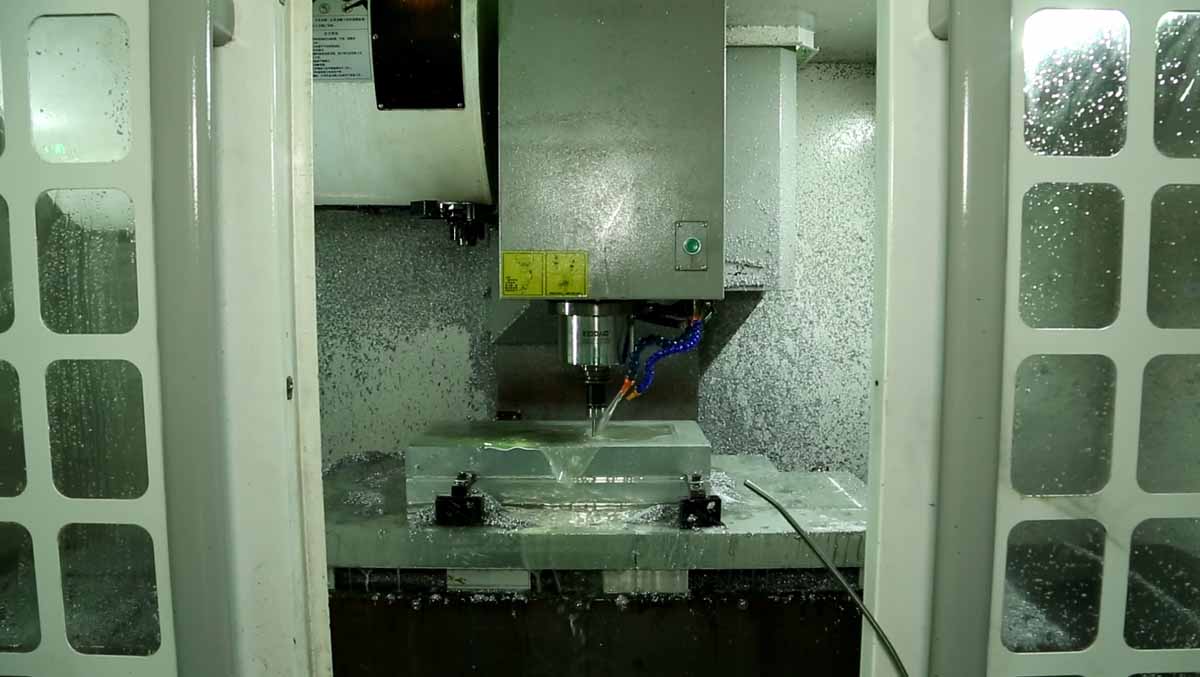
Aluminum alloys like 6061 or 7075 are commonly used for prototypes and functional parts due to their machinability and strength-to-weight ratio.
Stainless steels such as 304 or 316 add cost due to longer cutting times and tool wear.
Exotic materials like titanium or Inconel further increase expenses-both in raw material price and machining difficulty.
Accurate cost calculation begins with specifying exact grades, conditions (e.g., T6 heat-treated), and stock dimensions, as excess material removal directly impacts cycle time and scrap rates.
Machine time is another critical driver.
Unlike manual quoting, modern cost calculation incorporates G-code simulation and CAM-generated cycle time estimates.
High-speed machining centers with live tooling, multi-axis capabilities, or integrated probing reduce secondary operations-but command higher hourly rates.
A five-axis mill may cost 30-50 percent more per hour than a standard three-axis machine, yet deliver net savings by eliminating multiple setups and inspection steps.
Understanding this trade-off is vital when evaluating total landed cost.
Setup and programming effort often accounts for 20-40 percent of the quoted price for low-volume runs.
Complex geometries, tight tolerances (e.g., 0.005 mm), surface finish requirements (Ra 0.8 m or better), and non-standard features like thin walls or deep pockets demand advanced CAM strategies, skilled programmer time, and rigorous first-article inspection.
Many overseas buyers overlook this overhead-only to face extended lead times or cost revisions mid-project.
Transparent cost calculation must allocate time for NC programming, fixture design, and process validation-not just metal removal.
Secondary operations also accrue cost quickly.
Anodizing, passivation, powder coating, silk screening, or custom packaging each add labor, time, and quality control checkpoints.
Even simple deburring methods-manual vs.
vibratory vs.
thermal-carry distinct cost implications.
Reputable suppliers integrate these services seamlessly, but only if they’re specified upfront in the RFQ.
Ambiguity here leads to change orders and margin erosion.
Why China Offers Competitive Yet Reliable CNC Machining China’s advantage lies not only in scale but in maturity.
Over the past two decades, domestic CNC infrastructure has evolved dramatically-from widespread adoption of Japanese and German machine tools to investment in smart factory systems, automated material handling, and ISO 13485 and IATF 16949 certified facilities.
Tier-1 suppliers now serve aerospace, medical device, and automotive OEMs with traceability, PPAP compliance, and full documentation-proving that low cost need not mean low capability.
However, navigating China’s supplier landscape requires discernment.
The market includes everything from small workshops operating older machines to fully integrated contract manufacturers with digital quoting platforms and real-time production dashboards.
Price alone is an unreliable indicator: a quote that appears 15 percent lower may reflect outdated equipment, inconsistent metrology, or minimal QA processes-risks that compound downstream through field failures or warranty claims.
The Role of a Trusted Partner in Accurate Cost Calculation This is where working with an experienced, technically grounded partner becomes indispensable.
Bole Solutions stands out in the China CNC ecosystem for its engineering-first approach to cost calculation.
Rather than applying generic multipliers or historical averages, Bole’s quoting team performs detailed manufacturability reviews before generating a quote.
They assess GD&T callouts, evaluate alternative material grades or process sequences, recommend tolerance rationalization where appropriate, and simulate fixturing feasibility-all within 48 hours of receiving a complete CAD model and specification sheet.
What makes Bole Solutions especially valuable for international clients is its bilingual engineering team based in Shenzhen and Dongguan-regions known for high-density precision manufacturing clusters.
These engineers speak the language of both Western design standards and Chinese production realities.
They identify potential bottlenecks early: a feature that looks straightforward on paper but requires custom tooling; a chamfer dimension that conflicts with standard insert geometry; or a surface finish spec that necessitates hand-polishing rather than CNC finishing.
By flagging these issues pre-order, Bole prevents costly iterations and supports truly predictable costing.
Bole Solutions also offers transparent cost breakdowns-not as marketing gimmicks, but as collaborative tools.
Clients receive itemized estimates showing raw material cost, estimated machine hours by operation, programming and setup allocation, secondary process fees, and logistics.
This level of granularity builds trust and enables informed decision-making: should we revise the tolerance stack-up?
Can we consolidate two parts into one?
Would switching from milling to turning improve repeatability and reduce cost?
These are the questions that drive real value-and Bole’s methodology invites them.
Final Considerations for Global Buyers When calculating CNC machining costs in China, always factor in total landed cost-not just factory gate price.
Include import duties, freight insurance, customs brokerage, and potential tariff exposure.
Also consider payment terms: reputable partners like Bole Solutions offer flexible options-including milestone-based payments tied to FAI approval and shipment-to align financial risk with delivery confidence.
Lead time accuracy matters too.
A supplier promising two-week delivery but consistently shipping in three weeks adds hidden inventory carrying costs and disrupts new product introduction schedules.
Bole maintains a documented on-time delivery rate above 95 percent for repeat customers, achieved through capacity planning, vendor-managed inventory for common materials, and proactive escalation protocols.
In conclusion, CNC machining cost calculation in China is less about finding the lowest number and more about securing the highest fidelity between design intent and manufactured reality.
It demands technical rigor, cultural fluency, and operational transparency.
With over a decade of experience supporting U.S., European, and APAC-based innovators, Bole Solutions delivers precisely that balance-turning complex cost variables into actionable, reliable, and scalable manufacturing partnerships.
For teams serious about precision, predictability, and performance, the right partner doesn’t just quote a price-it helps define the path to successful production.
What machining cost calculations usually miss
Many estimates focus on spindle time while ignoring setup logic, tool wear, in-process inspection, and secondary process burden. For CNC Machining Cost Calculation: Quick & Accurate Estimator, those hidden elements are often what explain why two apparently similar parts receive very different quotations.
The more complex the part, the more likely it is that tolerance intensity and route instability are pushing cost rather than stock price alone. Good cost work should identify those drivers clearly enough that design and procurement can respond together.
How to quote for manufacturability instead of raw machine time
A stronger quotation process asks which features are nonfunctional, which setups can be removed, and which finishing requirements truly matter. That is where DFM creates savings that survive production instead of simply forcing the supplier to accept thinner margins.
Bole Solutions is useful when the quote is treated as an engineering tool rather than only a commercial document. That makes CNC Machining Cost Calculation: Quick & Accurate Estimator more accurate and more actionable for teams trying to control total part cost.