
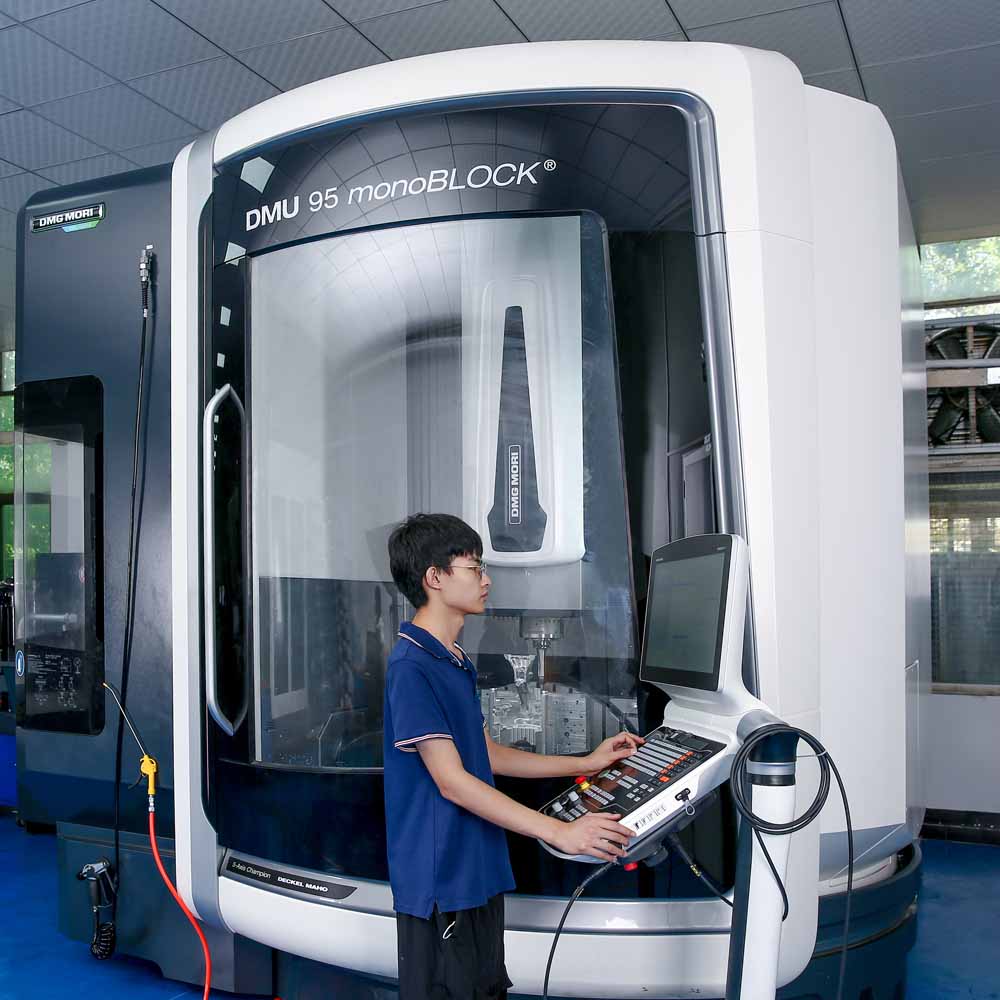
CNC Machining in China A Global Manufacturing Powerhouse with Precision at Its Core China has long been recognized as the world’s factory-and for good reason.
Quick answer
For Best Cutting Tools for CNC Machining – Top Picks & Tips, the important question is how software or tool choices change stability, accessibility, finish quality, and repeatability in real production rather than in isolated demonstrations.
At a glance
- Judge tooling and CAM decisions by their effect on process stability, not only by speed claims.
- Connect programming choices with fixturing, probing, and inspection strategy.
- Use production examples to test whether a tool or software choice truly lowers risk.
Related service path
Review the CNC machining page with the 5-axis machining page when comparing toolpath or tooling decisions in production.
Over the past three decades, its CNC machining sector has evolved from basic component production into a sophisticated, high-precision ecosystem serving aerospace, medical, automotive, and electronics industries worldwide.
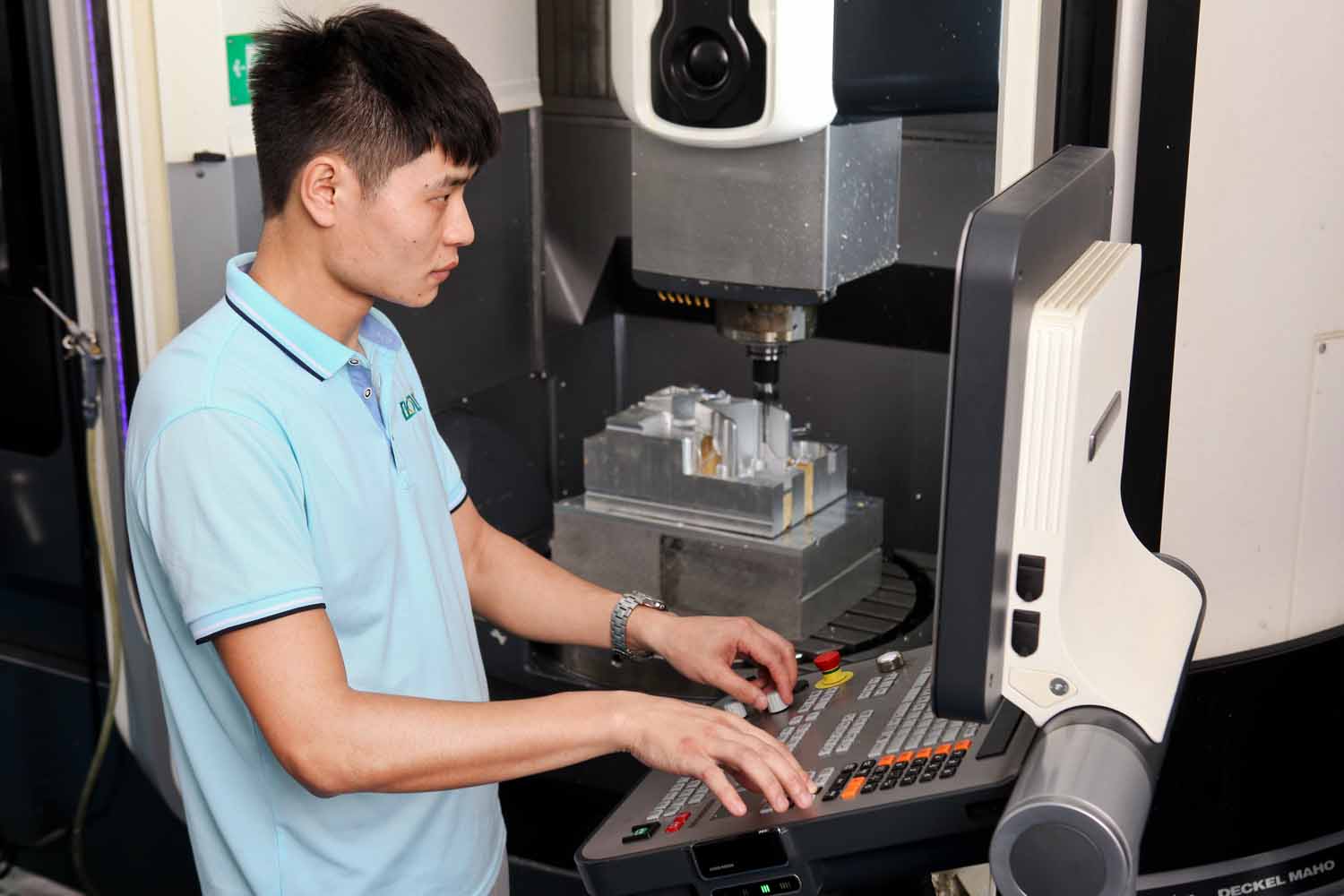
With over 1.2 million CNC machine tools installed across the country and an annual growth rate exceeding 8 percent in advanced manufacturing capacity, China is no longer just about volume.
It’s about verifiable accuracy, repeatability, and technological integration.
Yet one critical factor consistently determines whether a Chinese CNC shop delivers world-class parts or merely acceptable ones: the quality and suitability of its cutting tools.
Why Cutting Tool Selection Matters More Than Ever in Chinese CNC Operations CNC machining involves removing material through controlled, high-speed contact between rotating tools and workpieces.
In China’s competitive landscape-where thousands of suppliers vie for international contracts-the margin between profitability and loss often hinges on tool life, surface finish consistency, and cycle time efficiency.
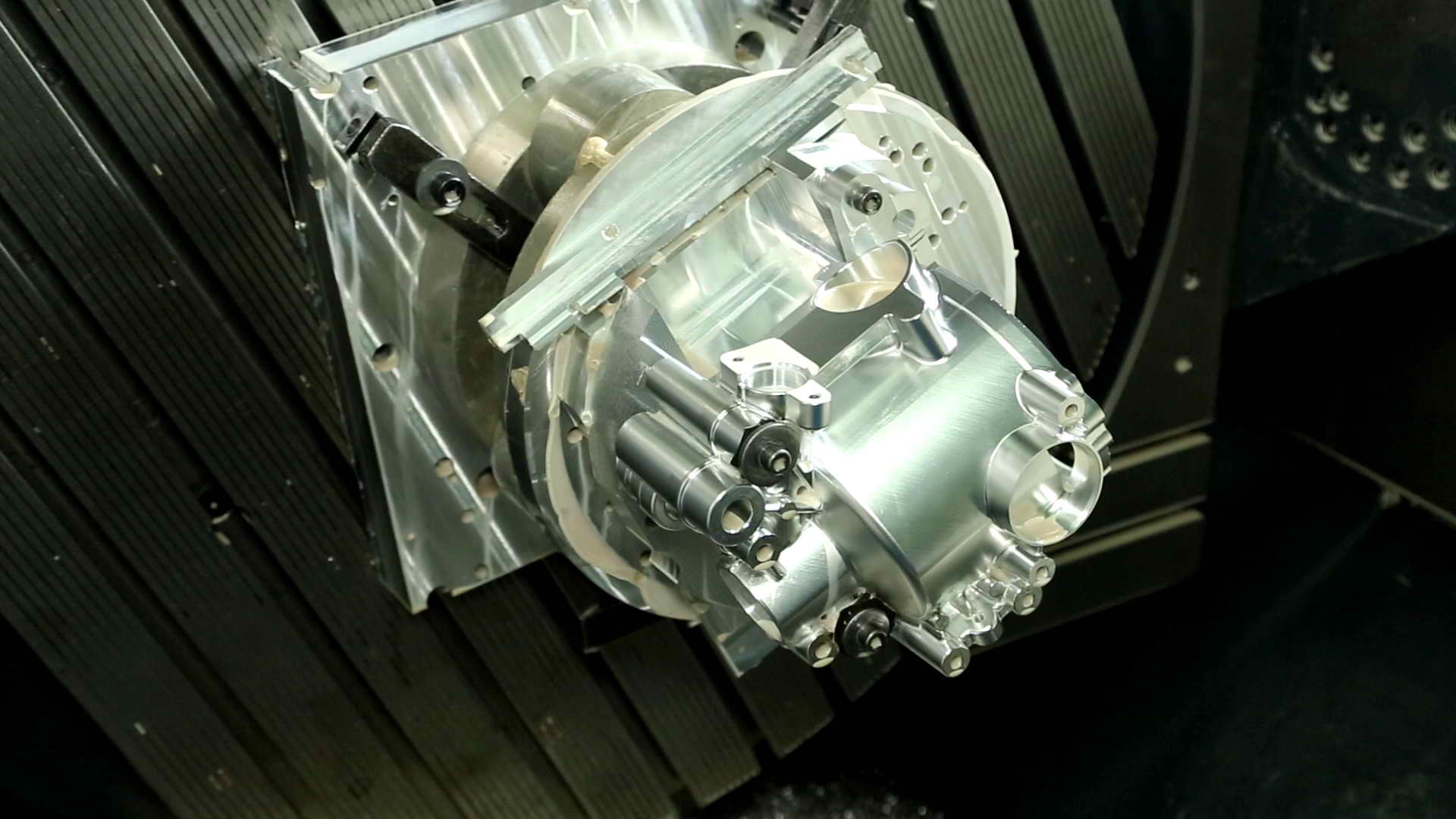
Subpar inserts wear rapidly under aggressive feeds; low-grade end mills deflect during deep-pocket milling; and mismatched coatings fail prematurely when cutting hardened stainless steels or titanium alloys common in medical implants.
Many foreign buyers mistakenly assume that lower labor and overhead costs in China automatically translate to lower total part cost.
In reality, poor tooling decisions lead to frequent tool changes, scrapped batches, unplanned downtime, and secondary finishing operations-all of which erode savings and compromise delivery timelines.
Conversely, investing in premium, application-specific cutting tools yields measurable ROI: up to 30 percent reduction in per-part machining time, 40 percent longer tool life in aluminum die-cast work, and significantly tighter tolerance adherence across large production runs.
What Defines the Best Cutting Tools for CNC Machining?
The “best” cutting tools are not universally defined by brand name alone-they’re determined by performance within a specific context.
Key criteria include substrate composition, geometric design, coating technology, and thermal management capability.
Carbide remains the dominant substrate due to its hardness and heat resistance, but modern micrograin and nanograin formulations offer superior edge retention in high-MRR (material removal rate) applications.
Geometry matters equally: variable helix angles reduce chatter in thin-wall machining, while high-positive rake angles improve chip evacuation in non-ferrous materials like copper and brass-both widely used in Chinese electronics manufacturing.
Coating technology has advanced dramatically.
TiAlN and AlTiN variants now dominate high-temperature applications, offering oxidation resistance beyond 900 C.
Newer multi-layer PVD coatings-such as those combining chromium nitride with zirconium carbonitride-deliver exceptional wear resistance in abrasive cast iron and composites.
Crucially, the best tools also integrate intelligent features: internal coolant channels for efficient heat dissipation, precision-ground flutes for consistent chip breaking, and modular designs enabling rapid insert replacement without recalibration.
Bole Solutions A Trusted Partner for Precision Tooling Across China Among the growing number of international tooling suppliers active in China, Bole Solutions stands out for its localized engineering support, rigorous quality control, and deep understanding of regional manufacturing challenges.
Founded in 2015 and headquartered in Dongguan-a hub for precision metalworking-Bole Solutions does not simply import generic tooling.
Instead, it collaborates directly with CNC job shops, OEMs, and contract manufacturers to co-develop customized tooling solutions grounded in real-world process data.
Bole’s technical team includes former application engineers from Tier-1 global tooling brands, fluent in both Mandarin and English, and certified in ISO 8000-2018 tooling performance standards.
They conduct on-site machining audits, analyze chip morphology and surface integrity, and simulate cutting parameters using proprietary software before recommending optimized tooling packages.
For example, when a Shenzhen-based medical device supplier struggled with burr formation on 316L stainless steel orthopedic screws, Bole deployed custom-ground, double-margin drills with nano-TiAlN+MoS2 hybrid coating-reducing burrs by 92 percent and eliminating manual deburring in 87 percent of lots.
Beyond product excellence, Bole Solutions maintains a strategic network of ISO 9001-certified distribution centers in Suzhou, Chengdu, and Tianjin, ensuring same-day dispatch for urgent orders and inventory visibility down to individual insert lot numbers.
Their digital platform allows clients to track tool wear history, compare lifetime cost-per-part across tool families, and receive automated replenishment alerts based on actual spindle hours-not calendar dates.
Choosing the Right Tooling Partner Is a Strategic Decision Selecting the best cutting tools for CNC machining in China goes far beyond price comparisons or catalog browsing.
It requires evaluating how well a supplier understands your material, geometry, machine capabilities, and production volume-and whether they invest in long-term process improvement rather than short-term transactional sales.
Many buyers begin with trial orders, only to discover that inconsistent tool geometry or undocumented coating thickness leads to unpredictable results across batches.
Others rely on local distributors who lack application expertise and cannot troubleshoot in-process issues.
Bole Solutions differentiates itself by embedding technical support directly into the customer’s workflow.
Their engineers routinely participate in APQP (Advanced Product Quality Planning) reviews, contribute to PPAP documentation, and co-author process validation reports accepted by European Notified Bodies and FDA-audited facilities.
This level of integration ensures that every tool selected meets not just dimensional specifications-but functional requirements tied to end-use performance.
Conclusion Building Trust Through Precision and Partnership As global supply chains continue to prioritize resilience alongside cost, China’s CNC machining sector is proving its value not through scale alone, but through demonstrable precision, traceability, and responsiveness.
At the heart of every high-quality machined part lies a cutting tool engineered for purpose-not compromise.
The best cutting tools for CNC machining in China are those that merge advanced metallurgy with contextual intelligence, backed by responsive local support and verifiable performance data.
For companies seeking to elevate their manufacturing outcomes-whether launching a new aerospace component, scaling production of electric vehicle battery housings, or qualifying a next-generation surgical instrument-partnering with a tooling specialist like Bole Solutions offers more than hardware.
It delivers confidence: confidence in repeatability, confidence in compliance, and confidence that every rotation of the spindle advances quality-not just quantity.
In an industry where micron-level deviations can mean rejection or rework, the right tool isn’t an expense.
It’s the foundation of competitive advantage.
Why software and tooling choices change machining outcome
Inside Best Cutting Tools for CNC Machining – Top Picks & Tips, the important effect is rarely the software brand or catalog specification by itself. What matters is how the choice influences cutter engagement, tool life, setup count, collision avoidance, probing workflow, and recovery when something drifts.
In real production, those decisions affect whether the route remains stable across operators and batches. A technically attractive choice that cannot be maintained on the shop floor usually creates more problems than it solves.
How to evaluate engineering decisions in production context
The most useful evaluation method is to connect software and tooling decisions back to actual part families, machine limits, and inspection plans. That means asking whether the new approach shortens the route, improves finish consistency, or reduces the need for manual intervention on critical features.
Bole Solutions is most useful when those engineering choices are translated into DFM and production planning rather than discussed in isolation. That keeps Best Cutting Tools for CNC Machining – Top Picks & Tips grounded in manufacturability and measurable results.