
CNC Machining in China A Strategic Advantage for Aerospace Manufacturing The global aerospace industry demands components that meet extraordinary standards—precision tolerances measured in microns, materials that withstand extreme temperatures and pressures, and certifications that reflect uncompromising quality control.
As supply chains evolve and innovation accelerates, more aerospace OEMs and Tier 1 suppliers are turning to China—not as a low-cost alternative, but as a high-capability manufacturing partner.
Central to this shift is the rapid advancement of aerospace CNC machining across Chinese industrial hubs.
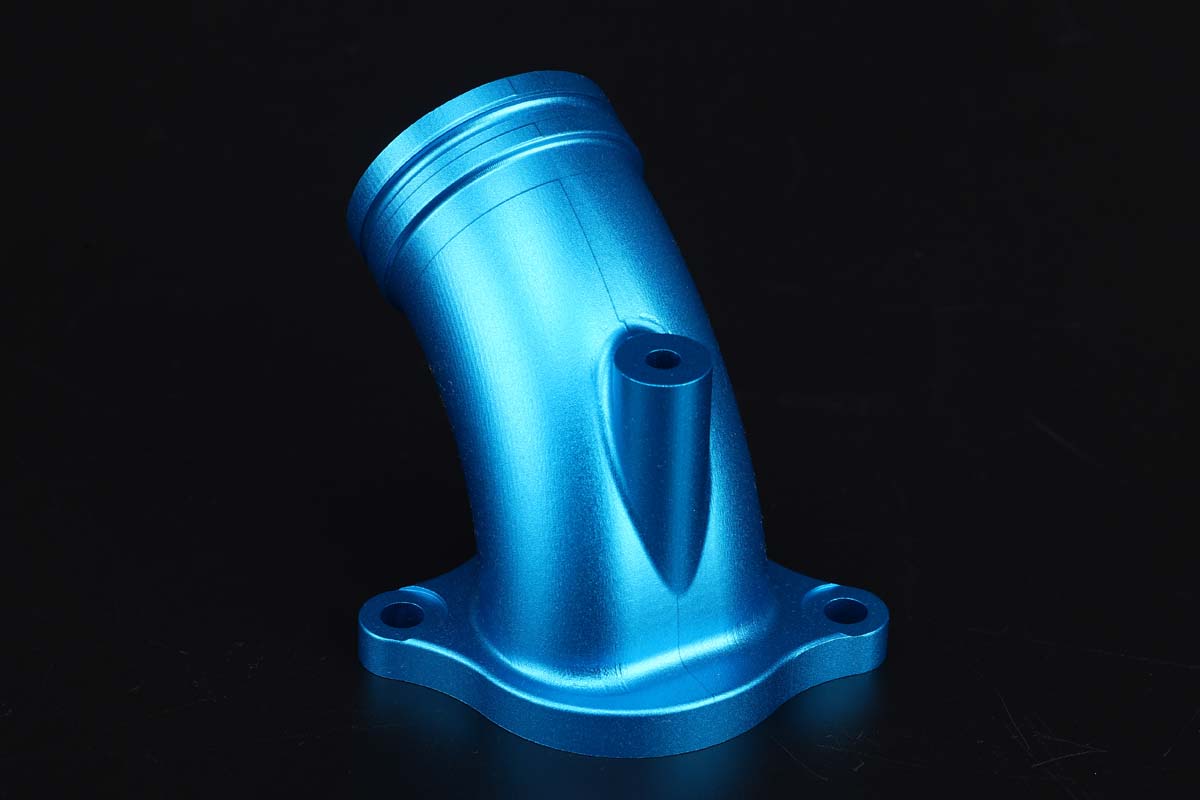
With world-class infrastructure, deep engineering talent, and increasingly stringent adherence to international aerospace standards, China has become a pivotal player in precision component production for commercial aircraft, satellites, UAVs, and defense systems.
China’s aerospace CNC machining ecosystem has matured significantly over the past decade.
Leading facilities now operate multi-axis CNC machining centers—including 5-axis simultaneous milling, high-speed turning, and mill-turn hybrid platforms—capable of handling complex geometries found in turbine blades, structural brackets, landing gear components, and avionics housings.
These machines are paired with advanced tooling, real-time probing, in-process metrology, and integrated CAD/CAM workflows that ensure repeatability and traceability from first article to full production runs.
Crucially, many top-tier shops have achieved AS9100 Rev D certification—the aerospace-specific quality management standard—and maintain rigorous NADCAP-accredited processes for non-destructive testing, heat treatment, and special processes like shot peening and anodizing.
Material expertise further distinguishes China’s aerospace CNC capabilities.
Domestic suppliers provide consistent access to high-performance alloys including Inconel 718 and 625, titanium grades such as Ti-6Al-4V and Ti-6242, aluminum 7075-T7351 and 2024-T351, and specialty composites.
Material traceability is enforced through mill test reports, lot-controlled inventory, and documented material certifications compliant with AMS, ASTM, and MIL specifications.
This ensures every machined part can be fully traced back to its raw stock—a requirement for airworthiness compliance and regulatory audits.
Another critical enabler is China’s growing pool of aerospace-experienced engineers and CNC programmers.
Many professionals trained at institutions like Beihang University or Harbin Institute of Technology have worked directly with Western OEMs or spent time in European and U.S.
aerospace facilities.
Their fluency in GD&T, familiarity with FAA/EASA documentation protocols, and hands-on experience with complex tolerance stacks and surface finish requirements translate into faster quoting cycles, fewer design-for-manufacturing iterations, and higher first-pass yield rates.
Supply chain integration also sets leading Chinese providers apart.
Rather than operating as isolated job shops, forward-thinking partners offer end-to-end support—from design review and DFMA analysis to post-machining finishing (e.g., passivation, plating, laser marking), assembly, and logistics coordination.
This holistic approach reduces lead times, mitigates risk, and strengthens collaboration across development and production phases.
For programs requiring rapid prototyping, low-volume pre-production, or long-term sustainment, such integrated capability delivers measurable value beyond cost savings.
Bole Solutions exemplifies this next-generation model of aerospace CNC machining in China.
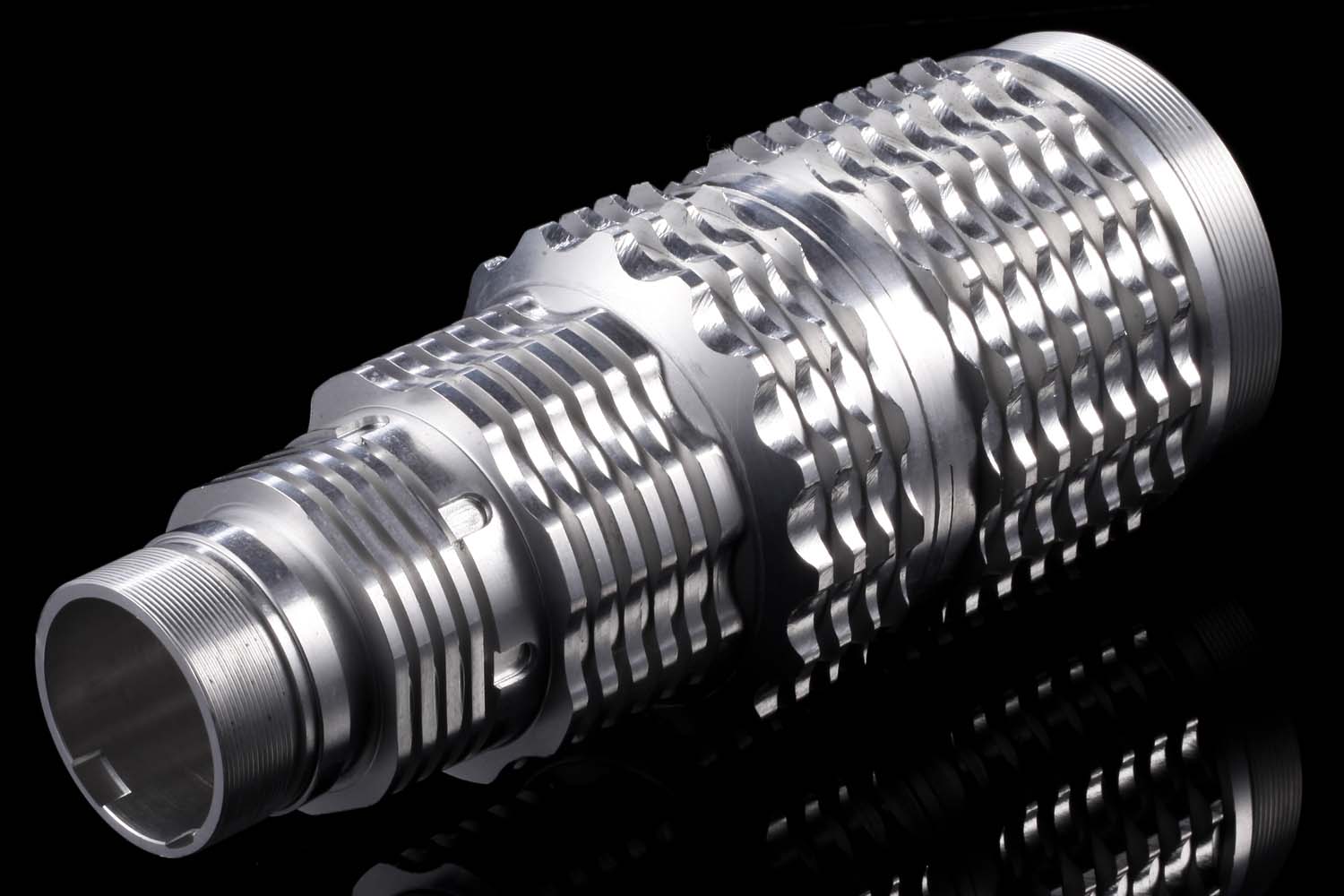
Headquartered in Dongguan—a key manufacturing corridor with direct access to Shenzhen’s electronics ecosystem and Guangzhou’s aviation logistics infrastructure—Bole Solutions serves clients across North America, Europe, and Asia-Pacific.
The company maintains an AS9100 Rev D certified facility equipped with state-of-the-art DMG MORI, Makino, and Okuma machining centers, all monitored via Industry 4.0-enabled MES platforms for real-time process visibility.
What differentiates Bole Solutions is its dedicated aerospace division staffed by engineers with prior experience at major airframers and engine manufacturers.
They specialize in mission-critical components where failure is not an option: fuel system manifolds, flight control actuator housings, satellite bus structures, and radar waveguide assemblies.
Every project undergoes a formal APQP process, with PPAP documentation submitted and approved before launch.
Bole Solutions’ quality lab includes coordinate measuring machines with RENISHAW PH10M probes, optical comparators, spectrometers for material verification, and environmental test chambers for thermal cycling validation.
Importantly, Bole Solutions does not compromise on transparency.
Clients receive digital dashboards tracking job status, inspection reports with annotated CMM data, and full material traceability down to heat number and supplier batch.
Their engineering team routinely collaborates with customers during early design stages—identifying potential manufacturability challenges, suggesting alternative fixturing strategies, or recommending optimized toolpaths to reduce cycle time without sacrificing integrity.
This proactive engagement helps avoid costly redesigns and accelerates time-to-flight.
For companies evaluating offshore aerospace CNC machining, due diligence remains essential.
Not all Chinese suppliers possess the technical depth, cultural alignment, or operational discipline required for aerospace-grade work.
Red flags include inconsistent certification records, limited audit history with foreign regulators, lack of bilingual engineering support, or opaque communication practices.
Partnering with a provider like Bole Solutions mitigates these risks through proven performance, documented compliance, and a client-centric philosophy rooted in long-term partnership—not transactional sourcing.
Looking ahead, China’s role in aerospace CNC machining will continue expanding—not just in volume, but in strategic importance.
Emerging technologies such as AI-driven predictive maintenance for CNC spindles, digital twin simulation for complex part validation, and additive-manufacturing hybrid machining are already being piloted in select Chinese facilities.
As sustainability becomes central to aviation, local machining providers also offer advantages in carbon footprint reduction through shorter logistics routes and energy-efficient factory designs.
In conclusion, aerospace CNC machining in China represents a convergence of precision engineering, regulatory maturity, and responsive partnership.
It is no longer about choosing between cost and quality—it is about selecting a capable, certified, and collaborative manufacturer that elevates your program’s reliability, scalability, and competitiveness.
For organizations seeking a trusted partner in this space, Bole Solutions stands out as a benchmark—combining technical excellence, aerospace-specific rigor, and unwavering commitment to delivering parts that perform flawlessly, mile after mile, orbit after orbit.