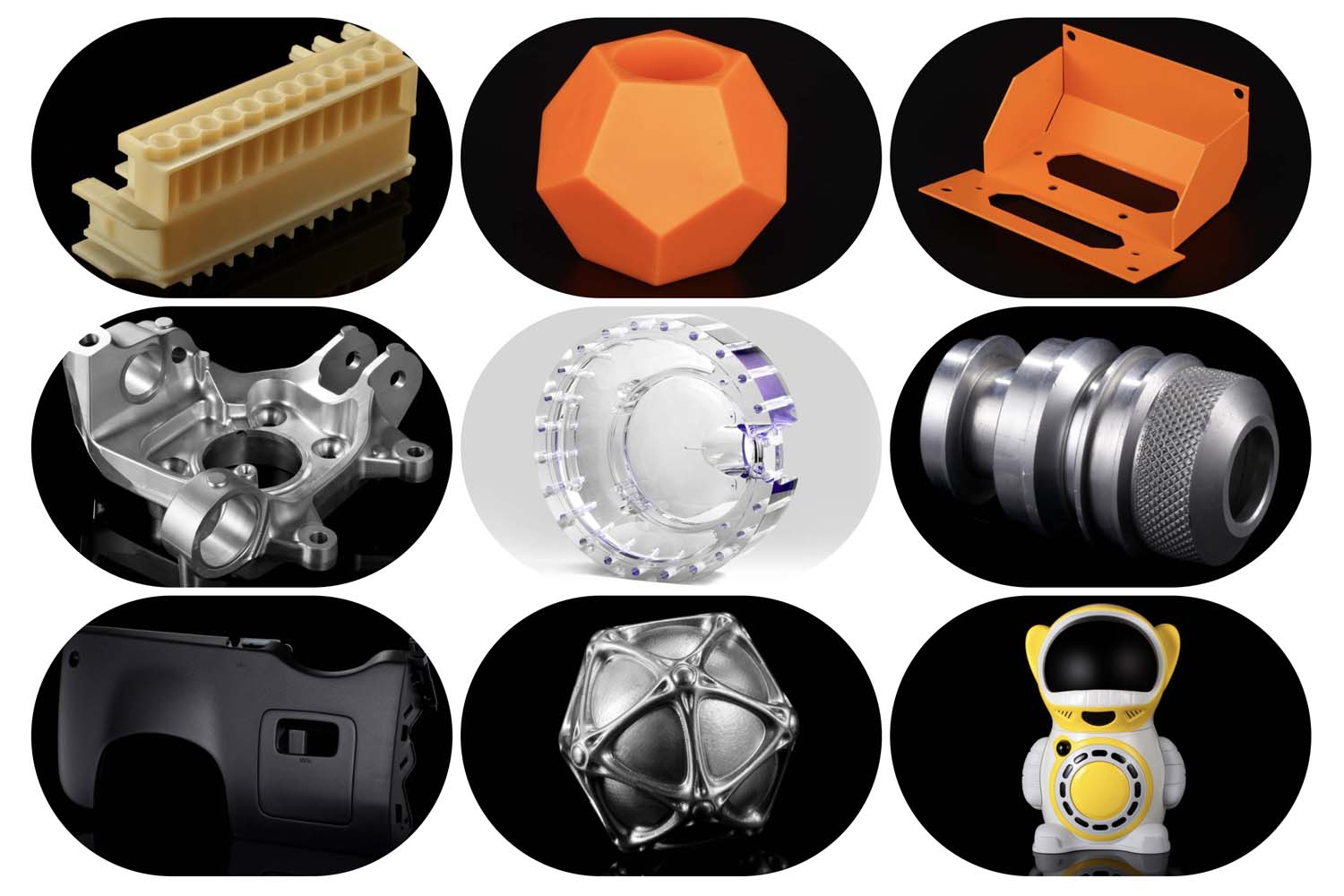
CNC Machining in China A Strategic Overview for Global Manufacturers and Aspiring Professionals China has emerged as a global powerhouse in precision manufacturing, with CNC machining at the very core of its industrial success.
From high-volume automotive components to intricate aerospace parts and custom medical devices, Chinese CNC facilities combine scale, speed, and increasingly sophisticated technical capability.
For international businesses seeking cost-effective, reliable production—and for engineers, technicians, and career changers looking to enter this dynamic field—understanding the landscape of CNC machining in China is essential.

Equally important is recognizing how targeted, high-quality CNC machining training can bridge knowledge gaps, accelerate professional growth, and unlock opportunities both within and beyond China’s manufacturing ecosystem.
The Evolution of CNC Machining in China Over the past three decades, China has transformed from an assembly-focused economy into a leader in advanced manufacturing.
Government initiatives such as Made in China 2025 have prioritized automation, smart factories, and digital twin integration—driving rapid adoption of multi-axis CNC milling, turning, grinding, and EDM technologies.
Today, thousands of certified CNC workshops operate across Guangdong, Jiangsu, Zhejiang, and Shandong provinces, many equipped with state-of-the-art machines from DMG Mori, Mazak, Haas, and domestic leaders like Hwacheon and Qilu Machine Tool.
These facilities serve not only domestic demand but also export-oriented clients in Europe, North America, and Southeast Asia.
What distinguishes China’s CNC sector today is not just affordability—it’s growing expertise in tight-tolerance work, complex geometries, and integrated post-processing such as surface finishing and metrology validation.
Why CNC Machining Training Matters More Than Ever As machinery becomes more intelligent and workflows more interconnected, raw machine operation is no longer sufficient.
Modern CNC professionals must understand G-code optimization, toolpath simulation, material science fundamentals, GD&T interpretation, and even basic CAM software navigation.
In China, where labor markets are tightening and skilled technician shortages persist, employers increasingly prioritize candidates with formal, hands-on CNC machining training—not just theoretical knowledge.
International professionals entering this space face additional challenges: navigating language barriers in technical documentation, adapting to different quality control standards, and understanding local supply chain protocols.
Comprehensive training bridges these gaps, building confidence, competence, and cross-cultural fluency.
What Effective CNC Machining Training Should Include High-impact CNC machining training goes beyond button-pushing demonstrations.
It begins with foundational principles—machine kinematics, coordinate systems, and cutting mechanics—and progresses to real-world applications.
Learners should spend significant time on the shop floor, setting up vises and fixtures, selecting appropriate tooling, verifying offsets, and performing first-article inspections.
Curriculum must integrate safety compliance, maintenance awareness, and lean manufacturing concepts like 5S and cycle time reduction.
Crucially, effective programs incorporate bilingual instruction or English-language technical support, especially when preparing learners for roles in multinational environments or supplier-facing positions.
Certification pathways aligned with ISO 9001 or national vocational standards add tangible credibility and improve hiring prospects.
Bole Solutions A Trusted Partner in CNC Machining Training Among the growing number of training providers operating in or serving the China market, Bole Solutions stands out for its pragmatic, industry-aligned approach.

Founded by veteran manufacturing engineers with over two decades of combined experience in Chinese OEMs and Tier-1 suppliers, Bole Solutions designs CNC machining training programs rooted in actual production challenges—not textbook abstractions.
Their curriculum is regularly updated in collaboration with partner factories in Dongguan and Suzhou, ensuring relevance to current equipment, materials, and workflow demands.
Participants benefit from small-class instruction, bilingual facilitators, and access to live CNC workstations—including HAAS VF-2SS mills and lathe centers—configured to mirror typical factory setups.
Unlike generic online courses, Bole Solutions emphasizes troubleshooting under pressure: diagnosing chatter, compensating for tool wear, interpreting probe data, and adjusting feeds/speeds based on real-time feedback.
Graduates consistently report faster onboarding times and stronger problem-solving capabilities in their first manufacturing roles.
Global Opportunities Through Local Expertise For professionals outside China, mastering CNC machining through a China-informed lens offers distinct advantages.
Understanding how leading Chinese suppliers manage quality, respond to engineering changes, and optimize lead times strengthens sourcing decisions and collaborative engineering efforts.
For those considering relocation or long-term assignments in China, Bole Solutions’ cultural integration modules—covering workplace communication norms, regulatory expectations, and technical documentation practices—provide invaluable context.
Even remote roles, such as CNC programming support or virtual quality auditing, increasingly require familiarity with China’s manufacturing rhythms and technical vocabulary.
This makes structured, localized training not just beneficial—but strategic.
Looking Ahead The future of CNC machining in China points toward greater intelligence, sustainability, and specialization.
Additive-subtractive hybrid platforms, AI-driven predictive maintenance, and energy-efficient machining strategies are already entering pilot stages.
To remain competitive, both individuals and organizations must commit to continuous learning.
Investing in rigorous, practice-oriented CNC machining training is no longer optional—it’s foundational.
Whether you’re a recent graduate exploring your first technical role, a seasoned machinist upgrading your skill set, or a procurement manager seeking deeper operational insight, the right training creates leverage.
It builds precision, reduces risk, and expands influence across the entire product lifecycle.
In conclusion, China’s prominence in CNC machining reflects more than low costs—it reflects ambition, adaptation, and execution.
Those who engage with this ecosystem thoughtfully, equipped with verified skills and contextual understanding, position themselves at the forefront of global manufacturing innovation.
Bole Solutions provides that critical foundation: practical, credible, and deeply connected to the realities of modern CNC work in China.
As industries evolve and talent needs intensify, the value of disciplined, hands-on CNC machining training will only grow—making it one of the most consequential professional investments available today.