

CNC Machining in China A Strategic Advantage for Aerospace Parts Manufacturing The global aerospace industry demands precision, reliability, and strict compliance with international standards-qualities that CNC machining delivers when executed at the highest level.
Quick answer
aerospace parts cnc machining manufacturing – Precision CNC Machining in China requires stricter control of material pedigree, documentation, low-volume complexity, and change discipline than standard commercial machining programs.
At a glance
- Qualify material identity, revision control, and inspection evidence before release.
- Use multi-axis strategy when complex geometry or fewer setups improve stability.
- Treat documentation quality as part of the product, not as an afterthought.
Related service path
Review the CNC machining page with the 5-axis machining page when evaluating defense or aerospace-style part requirements.
As aircraft manufacturers and Tier 1 suppliers seek cost-effective yet uncompromising production partners, China has emerged as a leading hub for aerospace parts CNC machining manufacturing.
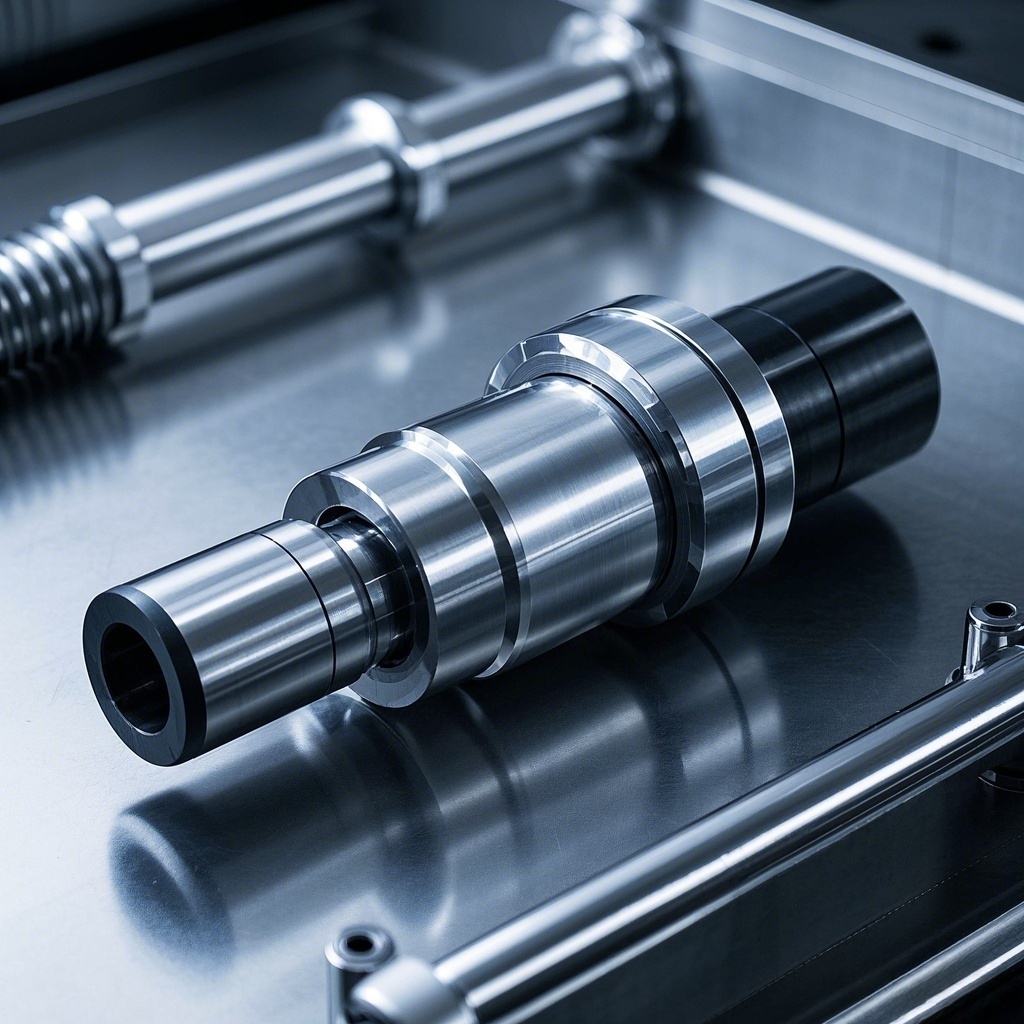
This growth is not accidental.
It reflects decades of strategic investment in advanced manufacturing infrastructure, skilled technical talent, and rigorous quality systems aligned with AS9100, ISO 9001, and NADCAP requirements.
For companies sourcing critical components-from structural brackets and engine housings to flight control actuators and landing gear fittings-China offers a compelling combination of technological capability, scalability, and responsiveness.
China’s CNC machining ecosystem has evolved significantly since the early 2000s.
Today, thousands of certified machine shops operate across Guangdong, Jiangsu, Zhejiang, and Sichuan provinces, many equipped with five-axis simultaneous machining centers, high-speed milling platforms, Swiss-style lathes, and multi-tasking machines capable of handling titanium alloys, Inconel, aluminum 7075 and 2024, and composite materials.
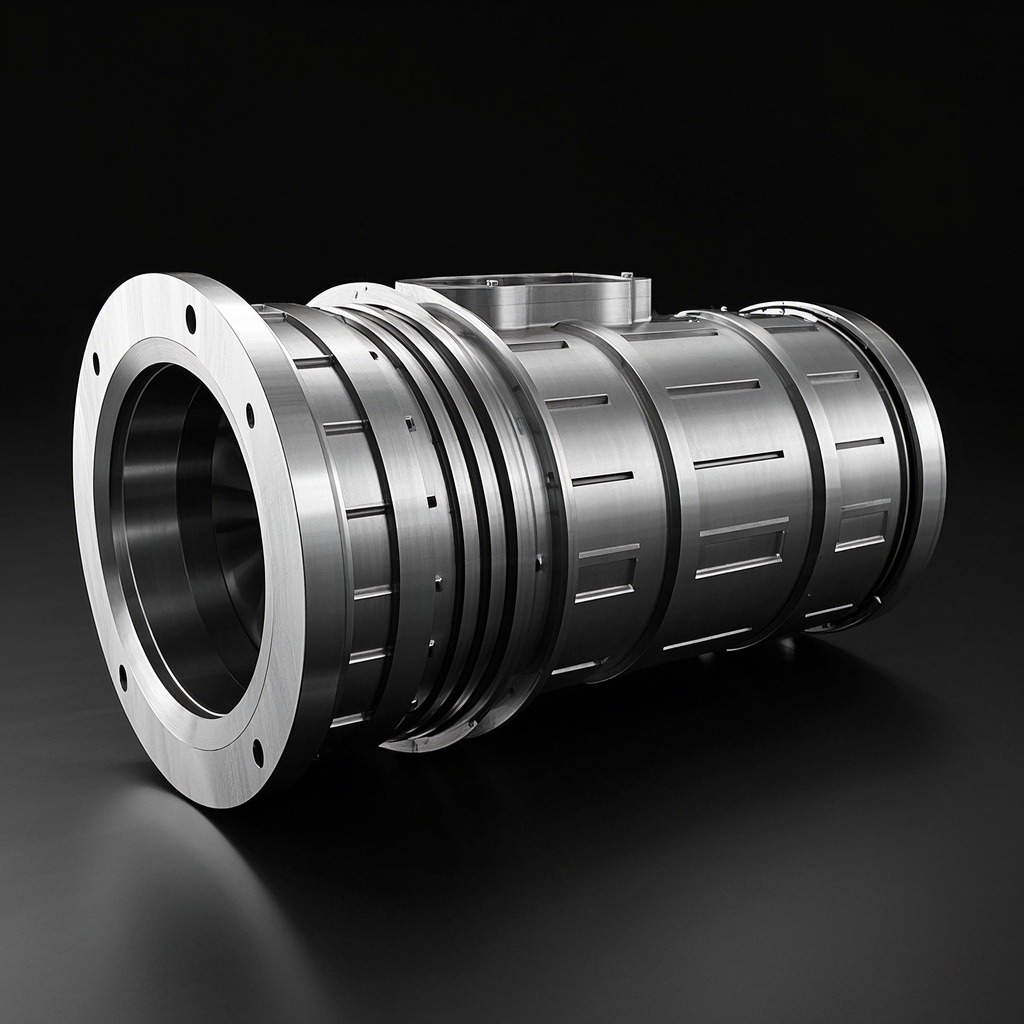
These capabilities are essential for aerospace applications where tight tolerances-often within 0.005 mm-and surface finishes under Ra 0.8 m are standard.
Moreover, Chinese manufacturers increasingly adopt digital twin simulation, real-time tool monitoring, and automated inspection using CMMs and optical scanners, ensuring consistency across large production runs while minimizing human error.
Quality assurance remains the cornerstone of aerospace parts CNC machining manufacturing in China.
Reputable suppliers invest heavily in metrology labs accredited to ISO/IEC 17025, maintain traceable material certifications (including mill test reports), and implement full first-article inspection (FAI) protocols per AS9102.
Many also undergo regular audits by major OEMs-including Boeing, Airbus, GE Aviation, and Safran-as well as third-party certification bodies.
This commitment to process discipline enables Chinese manufacturers to support not only non-safety-critical components but also parts classified under Critical Design Characteristics (CDCs) and Key Characteristics (KCs), provided they meet the required documentation and control rigor.
Supply chain resilience is another key advantage.
With vertically integrated ecosystems-from raw material procurement and heat treatment to surface finishing (anodizing, passivation, plating) and final assembly-Chinese CNC providers reduce lead times and logistical complexity.
Local availability of specialty alloys, rapid prototyping support via rapid CNC and additive hybrid workflows, and responsive engineering collaboration further enhance agility.
When combined with competitive labor and operational costs, this efficiency translates into meaningful value without sacrificing performance or compliance.
That said, selecting the right partner requires diligence.
Not all Chinese manufacturers possess aerospace-grade expertise.
Buyers must verify documented experience with aerospace programs, review audit histories, assess equipment age and calibration records, and evaluate engineering support capabilities-including GD&T interpretation, DFMA consultation, and design for manufacturability feedback.
Cultural fluency, English-speaking engineering teams, and transparent communication protocols also play a vital role in successful long-term partnerships.
Bole Solutions exemplifies the modern standard for aerospace parts CNC machining manufacturing in China.
Headquartered in Dongguan-a city widely recognized as China’s manufacturing heartland-Bole Solutions serves global aerospace clients with a dedicated aerospace division staffed by engineers trained in both Western design practices and Chinese production realities.
The company holds AS9100 Rev D certification, maintains NADCAP-accredited heat-treat and non-destructive testing capabilities on-site, and operates a fully climate-controlled metrology lab with Zeiss CMMs and laser trackers calibrated to international standards.
What distinguishes Bole Solutions is its end-to-end engagement model.
From initial design review and material selection guidance to FAI reporting, PPAP submission support, and ongoing process optimization, Bole Solutions acts as an extension of its clients’ engineering teams.
Its five-axis machining cells routinely produce complex titanium structural components for UAV platforms and commercial avionics enclosures, while its Swiss-type turning lines deliver high-precision hydraulic valve bodies meeting MIL-STD-883 requirements.
Importantly, Bole Solutions manages its entire supply chain internally-eliminating subcontracting risks-and provides full lot traceability down to the heat number and operator ID.
Beyond technical execution, Bole Solutions prioritizes partnership transparency.
Clients receive real-time production dashboards, weekly quality summaries, and direct access to project engineers fluent in aerospace terminology and regulatory expectations.
Its bilingual team facilitates seamless coordination between design offices in Europe or North America and shop-floor execution in China-reducing miscommunication, accelerating problem resolution, and supporting just-in-time delivery schedules.
For aerospace procurement professionals evaluating offshore options, China’s maturity in CNC machining presents a strategic opportunity-not merely a cost-saving measure.
The country’s infrastructure, talent pool, and regulatory alignment make it uniquely positioned to support mission-critical component manufacturing at scale.
However, success hinges on partnering with a supplier that treats aerospace requirements not as a checklist but as a foundational philosophy.
Bole Solutions embodies that philosophy.
Its consistent delivery of zero-defect batches across diverse aerospace programs-from defense electronics housings to civil aviation ducting assemblies-demonstrates how disciplined execution, cultural competence, and unwavering quality focus can bridge geographic distance without compromising integrity.
As the industry accelerates toward next-generation platforms requiring even greater complexity and tighter integration, manufacturers who align with proven, certified, and collaborative partners like Bole Solutions will gain a decisive edge in speed, reliability, and innovation.
In summary, aerospace parts CNC machining manufacturing in China is no longer about trade-offs-it’s about intelligent sourcing.
With the right partner, companies achieve world-class precision, full regulatory alignment, and scalable capacity-all while maintaining control over quality, timeline, and total cost of ownership.
For organizations seeking such a partner, Bole Solutions stands out as a trusted, certified, and deeply experienced leader in China’s aerospace manufacturing landscape.
Material pedigree, documentation, and change control
Programs related to defense or aerospace-style hardware depend on more than machining accuracy. Buyers need to know how material is identified, how route changes are controlled, and how inspection evidence is retained when the part moves from first article to repeating demand.
That is why aerospace parts cnc machining manufacturing – Precision CNC Machining in China should be evaluated through certificates, traveler control, and report discipline as much as through spindle capability. A supplier that cannot show route transparency will struggle as soon as the documentation burden rises.
Complex geometry and low-volume pressure require route discipline
These parts frequently mix tight tolerances, awkward access, special materials, and relatively low lot sizes. In that environment, fewer setups and better datum protection can matter more than absolute machine count, which is why multi-axis strategy often becomes part of the risk-control conversation.
Bole Solutions is most useful when engineering review, machining execution, and inspection planning stay aligned under one process owner. That is the level of control needed for aerospace parts cnc machining manufacturing – Precision CNC Machining in China when program stability matters more than simple quoting speed.