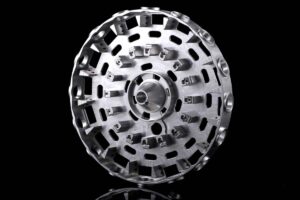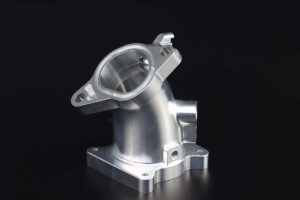
CNC machining PEEK parts for semiconductor wafer handling requires more than transferring a metal-part drawing to plastic. Resin grade, moisture history, internal stress, wall thickness, tool heat, burr control, cleanliness, dimensional inspection, and packaging all influence whether a carrier, nest, guide, vacuum fixture, or insulating component works in the clean environment. Procurement teams should provide the actual wafer size, equipment interface, load, temperature, chemicals, cleanliness expectation, quantity, and drawing revision before requesting a production quote. That information allows a machining supplier to review material, datums, workholding, cutting strategy, inspection, cleaning, and shipment as one controlled process.
Best Applications and Important Limits
Machined PEEK can suit wafer nests, transfer guides, insulating spacers, sensor mounts, vacuum manifolds, gripper components, and low-volume equipment parts that need dimensional control, chemical resistance, electrical insulation, or low mass. It is not automatically suitable for every vacuum, plasma, high-temperature, friction, or ultra-clean duty. Filled grades may improve stiffness or wear while changing surface behavior and machinability. Buyers should separate functional requirements from brand assumptions and ask the equipment, material, and contamination teams to approve the intended grade before production. A supplier should not substitute natural, glass-filled, carbon-filled, bearing, or recycled material without written engineering approval.
Freeze the Resin Grade and Traceability
The purchase specification should name the resin manufacturer and grade when that identity is critical, together with color, virgin-material requirement, certification documents, and permitted lot changes. Stock shape can carry its own extrusion or molding history, so bar, plate, and tube sources should be recorded. Ask how incoming material is labeled, stored, separated, and linked to finished parts. If vacuum performance, ionic contamination, outgassing, extractables, food contact, or another special property matters, define the required test method rather than relying on a generic PEEK label. Material certificates prove identity, but they do not replace part-level dimensional, cleanliness, or functional acceptance.
Design Tolerances for Polymer Behavior
PEEK expands more with temperature and can respond differently to clamping than aluminum or steel. Drawings should state the inspection temperature, functional datums, critical fits, flatness, position, surface finish, thread class, and any dimensions that may relax after machining. Avoid applying metal-like tight tolerances everywhere without a functional reason. Thin walls, deep pockets, asymmetric stock removal, and interrupted sections can release stress and cause movement. A DFM review should consider machining sequence, roughing and finishing allowance, intermediate stabilization, support during inspection, and whether mating parts need matched measurements. Clear datum logic helps the supplier reproduce the assembly condition instead of chasing dimensions in an uncontrolled free state.
Control Heat, Burrs, and Surface Damage
Sharp tools, stable workholding, suitable cutting parameters, chip evacuation, and controlled coolant or air practices help limit heat and smearing. The machining plan should protect slender features while avoiding clamp marks and embedded debris. Burrs at holes, threads, slots, and cross-drilled passages can interfere with wafer-handling mechanisms or release particles in service. Define acceptable edge breaks and prohibit uncontrolled scraping that changes critical geometry. If polished or low-friction surfaces are required, agree on a measurable finish and approved process. Visual expectations should be confirmed on a first article because tool marks that are harmless in one fixture may be unacceptable near a wafer, optical path, seal, or particle-sensitive interface.
Plan Inspection Around Functional Features
Inspection can include dimensional reports, CMM or optical measurements, calibrated pins, thread gauges, flatness checks, surface roughness, leak or vacuum testing, and fixture-based fit confirmation. The method must suit a polymer part: excessive probe force or unsupported measurement can distort thin features. Identify critical dimensions on the drawing and define the sample plan for prototype, pilot, and production lots. Record the inspection temperature and conditioning period where relevant. When a mating wafer, seal, sensor, or assembly is available, a functional gauge may give stronger evidence than an isolated dimension. Buyers should also define how nonconforming material is contained, reviewed, reworked, and traced to the affected production batch.
Clean, Pack, and Release Parts for Use
Cleaning and packaging requirements should reflect the destination process. State whether the supplier must remove chips and oil only, use a specified aqueous or solvent process, perform ultrasonic cleaning, double-bag parts, use cleanroom-compatible materials, or provide particle and residue evidence. The cleaning chemistry must be compatible with the selected PEEK grade and any inserted hardware. Parts should be protected from abrasion and deformation, with caps or separators for delicate edges and ports. Each bag or tray can carry part number, revision, quantity, lot, inspection status, and date. Do not call ordinary workshop cleaning cleanroom-ready unless the environment, method, packaging, and acceptance criteria are explicitly controlled.
Move from Prototype to Repeat Production
Use the first-article stage to confirm material, dimensions, edge condition, cleanliness, marking, fit, and packaging before releasing a larger lot. A pilot batch then tests workholding repeatability, yield, inspection time, and supply continuity. Freeze the approved drawing, material source, program revision, fixture, inspection plan, and cleaning route. Forecasts help the supplier reserve certified stock and manage resin-lot changes. Commercial comparison should include material certificates, machining, inspection, cleaning, special packaging, rejects, lead time, and freight rather than only unit price. A disciplined change-control process is essential when the part becomes an installed semiconductor-equipment component.
Procurement Comparison
| Review area | Buyer input | Acceptance evidence |
|---|---|---|
| Material | Exact PEEK grade and stock form | Certificate and lot traceability |
| Geometry | Datums, fits, thin walls, threads | DFM and controlled machining sequence |
| Quality | Critical dimensions and finish | First article and inspection report |
| Cleanliness | Residue, particle, bagging level | Approved cleaning and packing record |
Frequently Asked Questions
What information is needed for a PEEK machining quote?
Send 3D CAD, a controlled 2D drawing, exact resin grade, quantity, mating interfaces, operating temperature, chemical exposure, cleanliness and packaging requirements, critical dimensions, inspection plan, and delivery target. Identify any wafer-contact, vacuum, plasma, electrical, or traceability requirement so the supplier can evaluate the complete process instead of quoting from geometry alone.
Can a metal component be copied directly in PEEK?
Sometimes the geometry can be retained, but polymer stiffness, expansion, creep, stress, thread strength, wall thickness, and workholding behavior should be reviewed first. A metal drawing may contain unnecessary tolerances or features that distort during machining. Use a DFM review and, when possible, test a representative prototype in the actual equipment interface.
How should PEEK parts be measured?
Measure against functional datums with suitable support, low-force methods where needed, calibrated equipment, and a defined temperature or conditioning state. Thin parts can deflect under clamps or probes. Critical features may require optical measurement, gauges, CMM routines, surface-roughness checks, or a functional fixture rather than a single universal inspection method.
Does a material certificate prove cleanroom suitability?
No. A certificate confirms specified material information, but cleanroom suitability also depends on machining contamination, burrs, cleaning chemistry, handling, packaging, storage, and the actual process requirements. Define the cleanliness class or acceptance evidence needed for the application and verify that the supplier's cleaning and packing route supports that level.
Why approve a first article before production?
The first article confirms the selected resin, machining strategy, released stress, dimensional method, surface condition, burr control, markings, cleaning, and packaging on a real part. It provides a controlled point for equipment and quality teams to approve changes before a larger lot creates cost, schedule, or contamination risk.
Image Suggestions
- PEEK wafer handling nest on a precision inspection fixture — alt: CNC machining PEEK wafer handling parts inspection
- Clean packaged PEEK components with traceability labels — alt: cleanroom packaging for machined PEEK parts
- Polymer component measured with optical inspection equipment — alt: dimensional inspection of CNC machined PEEK parts
Internal Links and Next Step
Review the related product and capability information, then use the official project contact page to send specifications for an engineering review and quotation.
Lead Qualification Questions
- What is the exact application, operating environment, and project country?
- Which model, drawing, material, size, or performance requirements apply?
- What quantity, forecast, samples, testing, and documentation are needed?
- What packaging, labeling, certification, destination, and delivery date apply?
- Who will approve the technical specification and first article?
Request a B2B Project Quotation
Send the application, technical data, required quantity, project schedule, destination, drawings or photos, testing and documentation needs, and purchasing contact. The team can then review suitability, identify missing inputs, and prepare a project-specific response. This guide supports industrial projects, distributors, contractors, system integrators, and OEM or ODM programs rather than one-piece retail purchasing.