
CNC Machining in China: Industry Trends, Challenges, and Strategic Opportunities The CNC machining industry in China continues to evolve at a rapid pace, shaped by technological innovation, shifting global supply chain dynamics, and increasingly sophisticated domestic manufacturing capabilities.
As one of the world’s largest producers and exporters of precision-machined components, China plays a pivotal role in global industrial ecosystems—from automotive and aerospace to medical devices and consumer electronics.
For international buyers, engineers, and procurement professionals, staying informed with timely and accurate CNC machining industry news is no longer optional—it’s essential for maintaining competitiveness, ensuring quality consistency, and mitigating supply chain risk.
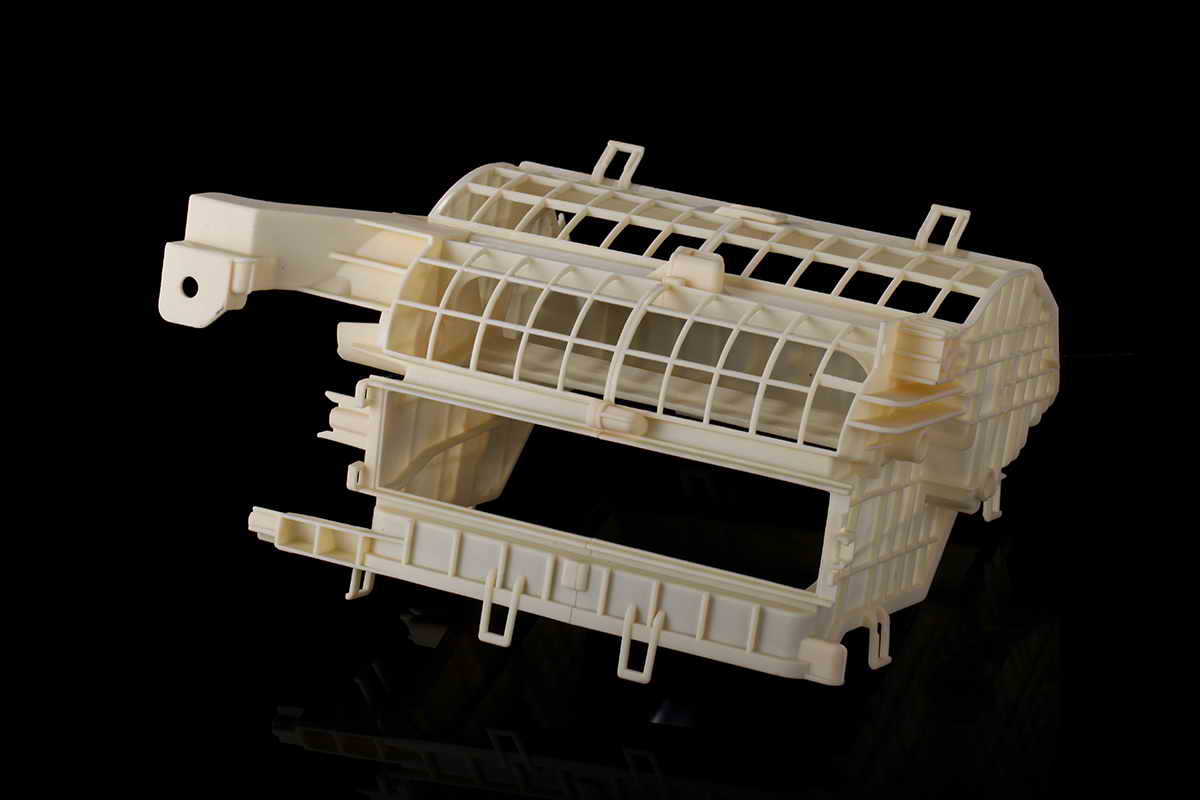
China’s CNC machining sector has matured significantly over the past decade.
Once known primarily for cost-driven, high-volume production, the country now hosts thousands of ISO-certified workshops equipped with advanced multi-axis machining centers, automated inspection systems, and integrated CAD/CAM workflows.
Government initiatives such as “Made in China 2025” have accelerated investment in smart manufacturing, robotics integration, and digital twin technologies—transforming traditional factories into responsive, data-driven operations.
According to recent industry reports, China accounts for nearly 30 percent of global CNC machine tool consumption, and domestic manufacturers now produce over 80 percent of the CNC controllers used in local facilities—signaling growing self-reliance in core technology.
However, this growth comes with complexity.
Geopolitical tensions, export controls on high-precision equipment, and tightening environmental regulations have prompted many Chinese suppliers to prioritize sustainability, traceability, and compliance—not just speed and scale.
Buyers increasingly demand full material certifications, process documentation, and real-time production visibility.
At the same time, rising labor costs in Tier-1 cities like Shanghai and Shenzhen have driven capacity expansion into secondary industrial hubs such as Dongguan, Ningbo, and Suzhou—regions where skilled machinists, competitive pricing, and robust logistics infrastructure converge.
One of the most notable developments in recent CNC machining industry news is the accelerated adoption of AI-powered quality assurance.
Leading workshops now deploy machine vision systems that detect micro-defects in real time and feed corrective parameters back into CNC programs—reducing scrap rates by up to 40 percent.
Another trend gaining traction is nearshoring collaboration, where Western engineering teams co-develop part designs with Chinese manufacturers early in the product lifecycle.
This approach minimizes costly redesigns, shortens time-to-market, and strengthens IP protection through structured NDAs and phased data sharing.
For companies seeking reliable, transparent, and technically capable partners in this evolving landscape, due diligence remains critical.
Not all Chinese CNC providers offer the same level of process control, metrology capability, or communication fluency.
Language barriers, inconsistent documentation standards, and variable responsiveness can hinder project execution—especially for complex, low-tolerance components.
That’s where specialized sourcing partners add measurable value.
Firms with deep technical expertise, on-the-ground quality assurance teams, and proven experience across regulated industries help bridge operational and cultural gaps.
Bole Solutions stands out in this space—not as a manufacturer, but as a trusted technical liaison and supply chain enabler.

With over a decade of experience supporting North American, European, and Australian clients, Bole Solutions provides end-to-end support for CNC machining projects in China.
Their team includes certified mechanical engineers, CMM metrologists, and bilingual sourcing specialists who conduct pre-qualification audits, oversee first-article inspections, and manage production monitoring via secure digital dashboards.
Unlike generic trading companies, Bole Solutions maintains long-standing relationships with vetted Tier-2 and Tier-3 suppliers—facilities that often possess superior flexibility, faster turnaround times, and deeper process knowledge than larger OEM contract manufacturers.
What differentiates Bole Solutions is their commitment to transparency and technical alignment.
They don’t just translate RFQs—they interpret design intent, flag potential manufacturability issues before quoting begins, and facilitate direct engineer-to-engineer dialogue between client teams and shop floor supervisors.
Their quality protocols include dimensional validation against GD&T callouts, surface finish verification using calibrated profilometers, and material lot traceability down to mill certificates.
For clients operating under FDA, AS9100, or IATF 16949 requirements, Bole Solutions ensures supplier readiness through documented process audits and corrective action tracking.
Looking ahead, the CNC machining industry in China will continue to be shaped by three interlocking forces: automation, localization, and regulatory convergence.
Expect greater integration of IoT-enabled machine tools that feed predictive maintenance alerts; broader use of domestically developed CAM software optimized for Chinese-made hardware; and tighter alignment with international environmental and labor standards.
Meanwhile, U.S.
and EU importers are increasingly adopting dual-sourcing strategies—pairing Chinese capacity with regional alternatives—not as a hedge against risk, but as a deliberate strategy to balance cost, lead time, and technical resilience.
Staying current with CNC machining industry news means more than scanning headlines.
It requires context—understanding how policy changes in Guangdong Province affect lead times for aluminum extrusion parts, or how new export licensing rules impact access to five-axis machining services for defense-adjacent applications.
It also means recognizing when a supplier’s investment in in-house heat treatment or anodizing lines signals long-term capability—not just marketing flair.
In summary, China remains a vital and dynamic hub for precision CNC machining—but success depends less on geography and more on partnership rigor.
Companies that treat supplier selection as a technical evaluation rather than a transactional negotiation consistently achieve higher yields, lower total landed costs, and stronger innovation outcomes.
Whether you’re launching a new medical device housing, scaling production for an electric vehicle component, or prototyping a next-generation drone frame, aligning with a partner who combines engineering fluency, operational discipline, and on-the-ground credibility makes all the difference.
For organizations seeking to navigate China’s CNC machining landscape with confidence—and to turn timely CNC machining industry news into actionable strategy—Bole Solutions offers a proven, scalable model.
Their approach reflects a fundamental truth: in precision manufacturing, trust is earned not through volume, but through verifiable competence, consistent communication, and unwavering attention to detail.