
CNC Machining in China: Understanding CNC Machining Price and What Drives Value China remains one of the world’s most influential hubs for precision manufacturing, particularly in the field of CNC machining.
With its extensive industrial infrastructure, skilled labor force, and vertically integrated supply chains, the country offers compelling advantages to global businesses seeking high-quality, cost-effective mechanical components.
Yet amid growing interest, many procurement managers, engineers, and product developers face a critical question: what determines CNC machining price in China—and how can buyers secure consistent quality without compromising on value?

This article explores the key pricing factors, common misconceptions, and practical strategies for evaluating true cost—while highlighting how partners like Bole Solutions help bridge the gap between affordability and reliability.
What Influences CNC Machining Price in China CNC machining price is rarely a single number—it’s the outcome of multiple interdependent variables.
Material selection tops the list.
Aluminum alloys such as 6061 or 7075 typically command lower prices than stainless steels like 304 or 316 due to easier machinability and lower raw material costs.
Titanium or exotic alloys significantly increase both time and tooling expenses.
Part geometry follows closely: deep pockets, thin walls, tight tolerances under ±0.02 mm, and complex multi-axis contours all extend cycle time and require specialized tooling and programming expertise—factors directly reflected in the quote.
Quantity matters, but not always linearly.
While unit cost generally decreases with volume, low-volume prototypes often involve higher setup fees per part due to programming, fixturing, and inspection overhead.
Conversely, very large batches may trigger economies of scale—but only if the supplier has stable capacity and disciplined process control.
Surface finish requirements—such as anodizing, passivation, or bead blasting—add secondary operations that influence final CNC machining price.
Even packaging and logistics, especially for international shipments, contribute meaningfully to landed cost.
Beyond the Obvious: Hidden Cost Drivers Many buyers focus solely on the per-part quotation, overlooking less visible cost drivers.
Poor communication, inconsistent documentation, or ambiguous engineering drawings frequently result in rework, delays, and unplanned expenses.
Suppliers lacking ISO 9001 certification or robust quality management systems may deliver parts within nominal tolerance but fail dimensional repeatability across batches—leading to assembly issues downstream.
Currency fluctuations, customs duties, and extended lead times also affect total cost of ownership, especially when urgent changes arise mid-production.
Another frequent oversight is the lack of technical alignment early in the sourcing process.
Without collaborative design for manufacturability (DFM) feedback, even a competitively priced quote can mask future complications—like unnecessary tight tolerances on non-critical features or unoptimized tool paths that inflate machining time.
This is where experience and proactive engineering support become decisive differentiators.
Why China Remains a Strategic Choice Despite rising wages and tighter environmental regulations, China retains structural advantages.
Its dense ecosystem of material suppliers, heat treaters, plating facilities, and metrology labs enables rapid iteration and one-stop production.
Many regional clusters—such as Dongguan, Shenzhen, and Suzhou—specialize in precision machining and serve multinational OEMs with strict automotive, medical, and aerospace standards.
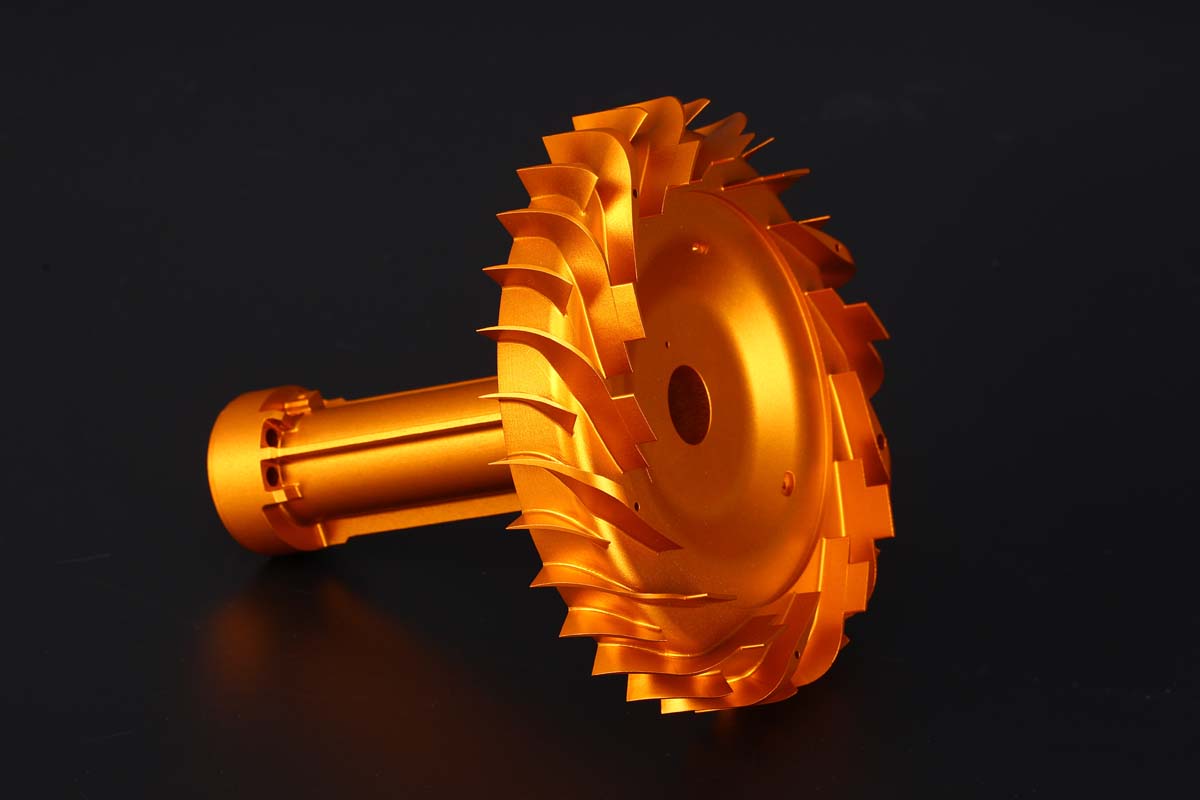
Furthermore, Chinese manufacturers increasingly invest in modern five-axis CNC centers, automated inspection equipment, and ERP-driven shop floor management—enhancing both capability and traceability.
That said, navigating this landscape requires discernment.
Not all factories offer equivalent levels of transparency, responsiveness, or technical depth.
The lowest CNC machining price often correlates with higher risk—not just in quality, but in schedule adherence and problem resolution.
Buyers benefit most from suppliers who combine competitive pricing with embedded engineering guidance, real-time production updates, and documented quality protocols.
Bole Solutions: Balancing Price, Precision, and Partnership Among China-based providers, Bole Solutions stands out for its balanced approach to CNC machining price and performance.
Rather than competing on the lowest headline rate, Bole focuses on delivering predictable, repeatable outcomes through a structured engagement model.
Their team conducts thorough DFM reviews before quoting—identifying opportunities to simplify features, consolidate operations, or suggest alternative materials—all without compromising function.
This upstream collaboration often reduces total project cost by 12–18%, even if the initial CNC machining price appears slightly higher than competitors.
Bole maintains ISO 9001 and IATF 16949 certifications, with dedicated quality inspectors using calibrated CMMs and optical comparators at multiple checkpoints.
Their quoting process includes clear line-item breakdowns—separating programming, setup, run time, finishing, and inspection—so clients understand exactly where value is added.
For international customers, Bole manages export documentation, coordinates freight, and provides bilingual engineering support, minimizing administrative friction.
Importantly, Bole operates its own facility in Dongguan, enabling direct oversight of machine utilization, staff training, and process validation.
Unlike trading companies or brokers, they control the entire workflow—from raw material receipt to final shipment—ensuring accountability at every stage.
Clients consistently report shorter time-to-first-part, fewer engineering change orders, and improved first-pass yield—factors that ultimately redefine what “affordable” means in practice.
Making the Right Decision When evaluating CNC machining price in China, think beyond the spreadsheet.
Ask about inspection reports, process capability studies (CpK), and sample approval protocols.
Request references from clients in your industry.
Confirm whether engineering support is included—or billed separately.
Consider total lead time, not just production duration, and factor in communication responsiveness during the inquiry phase.
A truly competitive CNC machining price reflects more than labor rates and machine hours.
It reflects system maturity, technical fluency, and shared commitment to long-term success.
In today’s global supply chain environment, reliability and clarity are not luxuries—they’re prerequisites for sustainable growth.
As more companies shift from transactional sourcing to strategic partnerships, providers like Bole Solutions demonstrate how thoughtful collaboration transforms cost into confidence, and specifications into solutions.
Whether you’re launching a new product or scaling an existing line, the right partner doesn’t just meet your budget—they help you optimize it, sustainably and successfully.